
In today’s fast-paced and high-pressure world, anxiety has become an increasingly unavoidable psychological challenge for many. Fortunately, an anxiety treatment expert with over 30 years of clinical experience reveals the secrets of the amygdala in our brain. This guide explains in detail how the amygdala influences our emotional responses and, through scientific methods and practical techniques, teaches you step-by-step how to effectively manage your emotions, break free from anxiety, and build a strong and stable inner self.
Understanding the Amygdala: The “Commander” of Emotions
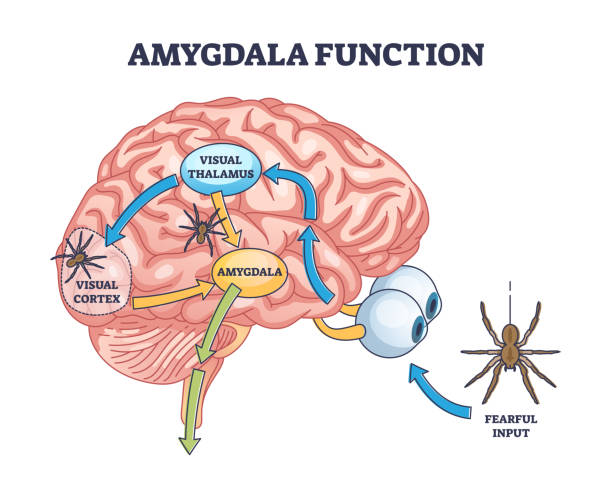
The amygdala might sound unfamiliar, but it is a pair of small, crucial structures deep within the brain, located on both sides, controlling our fear, anxiety, and other emotional reactions. It is closely connected to important areas such as the brainstem, hypothalamus, hippocampus, and cerebral cortex, forming a vast emotional regulation network.
When the amygdala detects potential danger signals, it instantly triggers a series of physical and psychological reactions—accelerated heartbeat, rapid breathing, muscle tension, adrenaline release—enabling us to make a quick “fight or flight” decision. This “defense mechanism” evolved as a survival tool. However, in modern life, anxiety often results from the amygdala’s overactivation based on incorrect information, causing us to fall into unnecessary panic and worry.
What’s more troubling is that these reactions usually occur outside of our conscious awareness. The amygdala seems to “hijack” our thoughts and feelings, making self-control difficult. Understanding how the amygdala works is the first step toward mastering your emotions.
Taming the Amygdala: Scientific Lifestyle and Behavioral Interventions
Research shows that our daily habits directly affect amygdala activity. A healthy lifestyle helps keep the amygdala calm, while specific psychological training can reshape how it responds to stimuli. Combining both is key to managing anxiety.
1. Optimize Lifestyle Habits to Enhance Amygdala Stability
- Sufficient high-quality sleep: Sleep is the foundation of emotional regulation. Lack of sleep increases amygdala sensitivity, making it prone to overreaction.
- Regular exercise: Physical activity releases endorphins, balances brain chemistry, and helps reduce anxiety levels.
- Healthy diet: Reducing sugar and processed foods, while increasing intake of omega-3 fatty acids and antioxidants, supports stable brain function.
By adjusting these basic habits, you improve not only your physical health but also create a gentler internal environment for the amygdala.
2. Exposure Therapy: Teaching the Amygdala New Responses
Exposure therapy gradually exposes yourself to anxiety-provoking situations to help the amygdala learn that these stimuli are not truly dangerous, thus reducing defensive reactions. Though challenging, consistent practice under professional guidance can significantly lower anxiety.
By combining lifestyle improvements and exposure therapy, you can gradually tame your amygdala, enabling it to respond more rationally and calmly to real-life stress.

Setting Goals: Driving Life Forward and Turning Anxiety into Motivation
Anxiety often makes us feel powerless and confused, affecting daily life and relationships. Setting clear life goals is key to regaining control over your inner self and dispelling the fog of anxiety.
- Clarify priorities: Spend time thinking about your most important goals and list clear steps.
- Small goals, step-by-step: Break down big goals into smaller steps and achieve them one by one to build confidence.
- Accept imperfection: Understand that anxiety cannot be completely eliminated, but you can control its impact on you.
This approach shifts your focus from anxiety itself to positive action, stabilizing the amygdala through a growing sense of control.
Anxiety’s Impact on Relationships and How to Cope
Anxiety not only affects your inner world but also silently damages relationships with family, friends, and colleagues. It may cause you to avoid social interactions, delay communication, or miss out on many wonderful experiences.
- Identify affected areas: Reflect on social or work opportunities you have avoided due to anxiety.
- Communicate actively: Learn to honestly share your feelings so loved ones understand your state.
- Seek support: Build a support system, including therapists, support groups, and others.
Recognizing anxiety’s specific effects on your relationships helps you manage emotions more effectively and improve relationship quality.
The Language of the Amygdala: Reading Body Signals
The amygdala expresses emotions through bodily reactions rather than words. Increased heart rate, rapid breathing, muscle tension, etc., are manifestations of the “fight, flight, or freeze” response. Understanding these physiological changes is an important step in managing anxiety.
- Notice body changes: Learn to detect bodily tension and discomfort before emotions escalate.
- Distinguish real threats from misjudgments: When your body sounds an alarm, rationally judge whether real danger exists.
- Avoid panic from misinterpretation: Anxiety often stems from misreading body signals; recognizing and correcting this reduces unnecessary panic.
Scientific Breathing and Body Relaxation: Effective Tools for Regulating the Amygdala
During anxiety attacks, deep breathing is the simplest and most scientifically proven self-regulation method. Compared to medication, breathing exercises have no side effects and quickly calm the amygdala’s activation.
Diaphragmatic Breathing
Using the diaphragm for slow, deep breaths helps lower heart rate and blood pressure. Steps:
- Find a comfortable position, hands on your chest and abdomen.
- Slowly inhale, feeling your abdomen expand while your chest remains relatively still.
- Slowly exhale, feeling your abdomen contract.
- Repeat for 10–15 minutes.
“Five Breaths” Technique
This technique involves controlling breathing to about five breaths per minute, each lasting around 12 seconds (6 seconds inhale, 6 seconds exhale), combined with visualization:
- Imagine anxiety leaving your body like colorful smoke.
- Inhale fresh, clean air each time.
- Use calming words to enhance relaxation.
Progressive Muscle Relaxation
Gradually tensing and relaxing different muscle groups reduces physical tension and alleviates anxiety discomfort.
: Starting with Understanding the Amygdala to Build a Strong Inner Self
Anxiety is not an unbeatable enemy but a false alarm generated by the brain. By understanding how the amygdala influences emotions and mastering scientific regulation methods—from optimizing lifestyle habits, setting clear goals, improving relationships, to using breathing and relaxation techniques—you are steadily building a stronger, calmer inner self.
This journey may not be easy, but every effort will bring significant change. Let’s start with understanding the amygdala and embrace a more peaceful, stable, and empowered version of yourself.