The Phone — A “Magic Box” Designed to Hook You

The advent of smartphones has completely changed our way of life. While they bring convenience, they also act like an invisible magic box constantly capturing our attention, making it hard to put down. In fact, smartphones and their apps are intentionally designed to grab your eyes and your time, keeping you scrolling endlessly and unable to break free.
The attitude of tech executives toward their own children’s phone use reveals the problem. Steve Jobs, co-founder of Apple, admitted that his kids never used iPads and that screen time was strictly limited at home. Bill Gates and his wife Melinda, founders of Microsoft, didn’t allow their children to have phones until they were 14 years old. Bill Dutton revealed that many CEOs and venture capitalists in the tech industry strictly limit their children’s screen time. Could these industry leaders know something the rest of us don’t?
The answer is yes. Increasingly, mental health experts warn that these tech giants are well aware how addictive smartphones and apps can be.
The Truth About Addiction: The Brain and Dopamine at War
Addiction essentially means people continue to seek certain stimulation and satisfaction despite knowing it may bring negative consequences. Smartphone designers deeply understand brain neural mechanisms — especially how to manipulate dopamine secretion. Dopamine, known as the brain’s “feel-good chemical,” is key to experiencing reward and pleasure.
Every time we use our phones, certain behaviors trigger dopamine release, such as receiving a message, seeing a like count increase, or watching an entertaining video. This dopamine “reward system” continuously reinforces our craving for the phone, even forming a conditioned reflex: merely thinking about the phone makes our brain crave dopamine, prompting us to pick it up again and again.
Designers embed various mechanisms in apps to maximize this effect — infinite scrolling, push notifications, like alerts, random reward systems, and more. These are all covertly manipulating your brain, making resistance difficult.

The Power of Novelty and Uncertainty
Why are we so easily addicted to phones? Largely because humans are naturally curious and dependent on novelty and uncertainty. The content on phones constantly changes, offering unexpected surprises and stimulation.
In psychology, there’s a term called “intermittent reinforcement” — rewards are not given on a fixed schedule but randomly and unpredictably. Think of how slot machines work: you don’t know if the next pull will pay off, and it’s this uncertainty that makes people try again and again. Phone apps use the same principle, with likes, comments, and messages appearing randomly, making us unable to stop refreshing.
Moreover, “Fear of Missing Out” (FOMO) plays a significant role in phone use. Endless notifications reinforce the fear of missing important information or social updates, forcing us to check our phones frequently. Sadly, this frequent checking doesn’t ease anxiety but worsens it, trapping us in a vicious cycle of “pick up phone — momentary relief — put down phone — increased anxiety.”
The Social Media Trap: Junk Food–Like Content and Algorithm Control
Social media is undoubtedly the hardest-hit area for smartphone addiction. It’s like the “junk food” of the digital age — we know it’s unhealthy, yet we can’t stop consuming. Social media not only uses addictive designs but also exploits user data for commercial gain.
When you spend time on social media, platforms analyze your interests, preferences, and behaviors with algorithms to push content that suits your taste, locking your attention in. Meanwhile, you unknowingly expose a huge amount of personal information — your identity, relationships, likes, habits, and more.
This data helps platforms deliver more precise ads and content, driving more interaction and generating greater commercial value. In other words, social media companies make money by capturing your attention, turning your time and focus into their most valuable “commodity.”
The Myth of Multitasking and the Erosion of Focus
Although phones seem to enable “multitasking,” research shows that frequent task-switching only weakens our focus and efficiency. Multitaskers find it hard to ignore irrelevant information and struggle to organize information properly into memory.
Long-term reliance on fragmented phone information actually trains us to develop short-lived, superficial attention patterns. We get used to skimming and scanning quickly, making deep thinking and sustained focus difficult.
This loss of focus not only harms learning and work performance but also negatively affects long-term memory. Information overload from phones overloads our working memory, causing mental fatigue and reducing our ability to absorb and store important information.
The Impact of Phones on Sleep, Stress, and Creativity
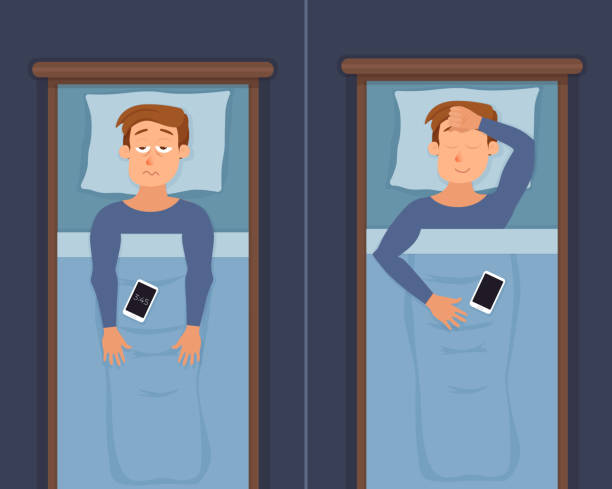
Phone use, especially before bedtime, severely disrupts sleep quality. Blue light suppresses melatonin secretion, delaying sleep onset. Meanwhile, stimulating content like news, games, and social media excites the mind, making relaxation difficult.
In addition, phone-induced stress and anxiety come from information overload, FOMO, and the psychological burden of instant responsiveness. Many find it hard to resist replying immediately to work emails or messages, further increasing stress.
Most concerningly, phones rob us of boredom — which ironically is the fertile soil for creativity. Overusing phones distances us from the “flow” state and limits deep thinking and inspiration.
How to Take Back Your Life and Build a Healthy Relationship with Your Phone
1. Quantify Your Usage Habits
Don’t rush to change; first understand yourself: how many times do you pick up your phone daily? How long do you use it? What do you do on it? Both Android and iPhone have built-in screen time trackers, or you can download third-party apps to log this data.
2. Assess Your Relationship with Your Phone
Write down answers in a notebook:
- What features or aspects of your phone do you like?
- What do you dislike about your phone?
- After prolonged phone use, what positive or negative changes do you notice in yourself?
- Do you feel your smartphone helps you more or causes more trouble?
3. Set Clear Usage Boundaries
- Designate specific daily time slots for phone use, especially avoiding phone use within one hour before bedtime.
- Turn off unnecessary push notifications to reduce distractions.
- Use focus apps (like Forest or Focus To-Do) to help maintain attention.
- During deep work sessions, switch to airplane or do-not-disturb mode.
4. Cultivate Offline Activities and Habits
- Spend more face-to-face time with family and friends to reduce virtual social dependence.
- Develop hobbies such as exercising, reading, or painting to fill the time phones take away.
- Try “digital detox” days, e.g., one full day a week without any phone use.
5. Build Tolerance for “Boredom”
Get comfortable with occasionally having nothing to do to spark creativity and deep thinking. Try resisting the urge to reach for your phone and observe your inner feelings.
Phones themselves aren’t “bad things” — they are tools. But tools used improperly become burdens. Understanding the psychological mechanisms behind phone design and recognizing the nature of addiction are key to truly mastering your time and life.
Starting today, try to be a “conscious” phone user, not swayed by endless push notifications, alerts, and reward systems. Reclaim your focus, freedom, and inner peace.
Your life shouldn’t be hijacked by a small screen; it should be controlled by you.