When it comes to personal finance and investing, most people believe that knowledge, data, and technical skills are the most critical success factors. But the deeper you dive into the world of investing, the more you’ll realize this truth: the real winners are those who can manage their emotions better than anyone else.
A few months ago, I attended a small financial seminar. One seasoned investor said something that stuck with me:
“Before you learn how to make money, you need to learn how to manage your emotions and mental state.”
It sounded simple—almost cliché—but it held profound power. It reveals the core reason why so many people repeatedly make poor decisions in the market and suffer losses. It’s not because they’re unintelligent. It’s because they’re too emotionally reactive.
The Case of Liu Yuansheng: A Master Who Stays Emotionally Detached from the Market
Recently, news involving Vanke, one of China’s largest real estate companies, made headlines. Liu Yuansheng, Vanke’s largest individual shareholder, publicly filed a complaint to regulators, shaking the market. But what intrigued me more than the news was the man behind the name.
Liu Yuansheng, now 73, originally from Hong Kong and residing in Canada, is a true Renaissance figure. He’s not only a veteran entrepreneur in trade and real estate but also a classically trained violinist—formerly concertmaster of the Hong Kong Philharmonic and chairman of the Hong Kong Sinfonietta. His life blends business with beauty, investing with art.
In the 1980s, Liu met Wang Shi, the founder of Vanke, at a music event. He gave Wang a recording of the violin concerto Butterfly Lovers, which sparked a bond built on mutual appreciation for the arts. That connection soon evolved into a deep business partnership and lasting friendship.
In 1988, Liu invested 4 million HKD to purchase 3.6 million shares of Vanke. Over the next 28 years, without selling a single share, he gradually increased his stake through rights offerings and secondary purchases—eventually owning 1.21% of the company. His investment grew from 4 million HKD to over 2 billion RMB, an extraordinary return that even surpassed Buffett’s.
When asked how he maintained such unwavering confidence, Liu simply said:
“I prefer to look farther ahead. I’m not interested in chasing small gains.”
He spends 90% of his time on music, art, and philanthropy, and rarely monitors the market.
“A life spent watching stock prices every day isn’t a happy one,” he says.
That’s the ultimate level of investing: detach your emotions from the market, and anchor your time in a meaningful life.
Science Confirms: The More Info You Consume, the Worse Your Returns
A well-known behavioral finance experiment revealed a surprising insight:

Participants were divided into several groups, each with the same amount of capital to invest. The only difference? The frequency with which they received market updates. Some got daily updates, others weekly, monthly, or even just once a year.
The result: those who received the least information and traded the least actually earned the highest returns.
Why? Because the human brain is wired to react impulsively to new information. The more frequently you’re exposed to price swings, the more likely you are to make emotional decisions. Frequent trading doesn’t just increase risk—it often leads to buying high and selling low, eating away all your profits.
In reality, many investors boast of “tripling their portfolio in one year.” But very few can double their returns consistently over five years.
Investing is not a sprint. It’s a steady, long-distance marathon.
Your Greatest Enemy Isn’t the Market—It’s Your Own Fear and Greed
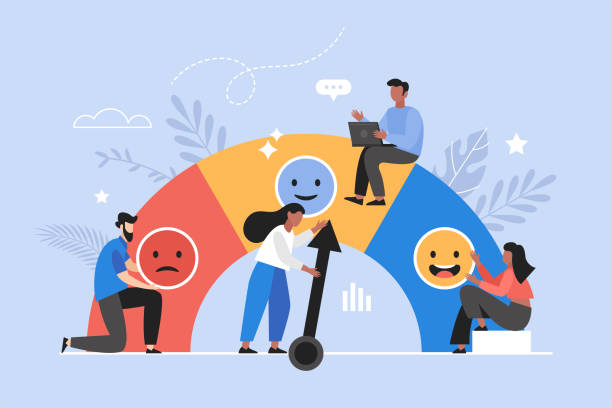
Human emotions are stubborn and deeply ingrained. During economic booms, optimism runs high. Investors become overconfident and greedy, convinced the bull market will never end.
But during downturns, fear spreads like wildfire. Rational thinking collapses.
You hesitate to buy when the market dips to 3,000 points, but you rush in at 5,000 out of FOMO.
You panic at the first sign of loss, only to regret not holding on when prices rebound.
Professional investors, however, act the opposite way. They’re emotionally counter-cyclical: pulling back when others are greedy and entering when others are scared.
As Warren Buffett famously said:
“Be fearful when others are greedy and greedy when others are fearful.”
That’s not just a catchy quote—it reflects a profound level of emotional intelligence and self-control.
In investing, success doesn’t go to the smartest—it goes to those who can resist impulsiveness and patiently stay the course.
Buffett on Emotions: “I’m Not Perfect, But I Don’t Let My Emotions Control Me”
Buffett has shared plenty of wisdom on how he manages his own emotional responses:
- “If you can avoid losing money, you’re already halfway to making it.”
- “Fear is more dangerous than greed because it’s faster and more destructive.”
- “I feel good when others are panicking.”
- “I’ve made lots of mistakes, but I never let them ruin my financial health.”
All of these statements point to one core competency: emotional stability.
Buffett’s legendary success doesn’t come from timing the market—it comes from managing his temperament when others lose theirs.
The Psychological Trap of the “Mental Account”
In Thinking, Fast and Slow, Daniel Kahneman introduces the concept of “mental accounting”—our tendency to categorize money into emotional “buckets” that defy logic.
For instance, say you own two stocks: one has gained, the other has lost. Both are ready to sell.
Most investors instinctively sell the winner and hold the loser. Why? Because selling the winner feels like a victory, and holding the loser delays the pain of admitting a mistake.
This is known as the disposition effect, and it leads to countless bad decisions.
To avoid it, you need a clear strategy before emotions cloud your judgment. Set your goals, establish your rules—and prepare for storms while the skies are still clear.
The True Nature of Fear and Greed: One Makes You Hesitate, the Other Makes You Overreach
Fear and greed are two sides of the same coin, and both are dangerously irrational.
- Fear makes you sit on the sidelines and miss opportunities.
- Greed pushes you to jump in recklessly at the peak, even leveraging up or going all in.
Fear keeps you from earning; greed causes you to lose even more.
Together, they are the twin dragons of self-sabotage—and the hardest emotional beasts for everyday investors to tame.
How to Develop an “Emotion-Proof” Investment Mindset
- Accept Your Imperfections
You’ll make mistakes—it’s inevitable. But don’t let emotions dictate your next move. Learn to pause, reflect, and reset. - Set Long-Term Goals
Stop obsessing over what happens this week or next month. Define your 3-, 5-, or 10-year targets so that short-term fluctuations don’t rattle you. - Build Your Investment Principles
Whether you choose value investing, index funds, or trend following—stick with it. Have clear entry and exit rules, and follow them like a pilot follows a flight plan. - Reduce Your Market Monitoring
Constantly refreshing apps and watching every uptick and downtick only drains you. Check your portfolio at set intervals—then go live your life. - Keep an Emotional Journal
During critical decisions, write down your emotions, reasoning, and results. Over time, patterns will emerge, revealing how emotions sabotage or support your thinking.
Final Thoughts: Personal Finance Starts with Personal Discipline
Investing may look like a numbers game on the surface—but at its core, it’s an emotional battleground.
Those who build true wealth aren’t the ones with the flashiest trades or hottest tips.
They’re the ones who master their inner world—who tame fear, temper greed, and endure boredom without jumping ship.
The ability to earn money doesn’t lie in predicting the future. It lies in the emotional consistency to stick with what works.
The earlier you learn this, the faster your financial life will transform and grow.
So if you’re on the path to financial freedom, don’t rush into trends, influencers, or flashy funds. Start by turning inward and asking yourself:
“Am I making this decision from emotion—or from clarity?”
The more often your answer is the latter, the closer you are to lasting wealth.