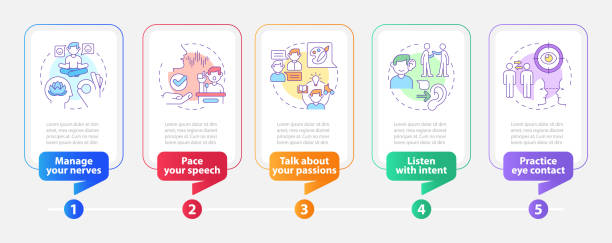
A successful speech is not just about delivering clear content; more importantly, it’s about engaging your audience, resonating with them emotionally, and motivating them to take action. This article provides you with a systematic five-step framework, guiding you from audience research to content design, structural optimization, and calls to action. Integrating the latest neuroscience and behavioral psychology research, it deeply explores the mechanisms behind human learning, thinking, and action, helping you make your speech more persuasive and influential.
Step One: In-Depth Research — Understand Your Audience and Objectives
The first step in preparing your speech is to conduct thorough research on your audience, gathering factual information and making informed guesses. Clarify the expectations of both the organizers and the audience, and identify the “gap” you need to fill.
Understand Basic Audience Information and Hypotheses
Before preparing, you need to be clear: Who is your audience? What is their background? How familiar are they with your topic? For example, in a speech aimed at interaction designers, programmers, and digital marketers, you might know:
- The audience size is about 50 people;
- Most come from a particular company, with some external participants;
- Most have some familiarity with your topic.
Meanwhile, you can reasonably guess that:
- The majority are aged 30 to 40, with some younger or older attendees;
- The gender ratio is roughly balanced;
- Some know you and your views, but most are strangers;
- The audience might be curious but also somewhat skeptical, not easily accepting change.
Note that these are hypotheses to be confirmed by communicating with the organizers or directly with the audience to avoid bias affecting your preparation.
Clarify Organizers’ and Audience’s Goals
You need to satisfy two key groups when delivering your speech:
- Organizers: Typically, they want the speech to achieve specific goals, such as encouraging product managers to proactively contact them or motivating employees to engage in projects;
- Target Audience: They care about how the speech helps solve their practical problems, such as saving project time and costs.
These goals might complement each other or conflict. Ideally, design your speech to benefit both groups; if there are conflicts, communicate and coordinate ahead of time.
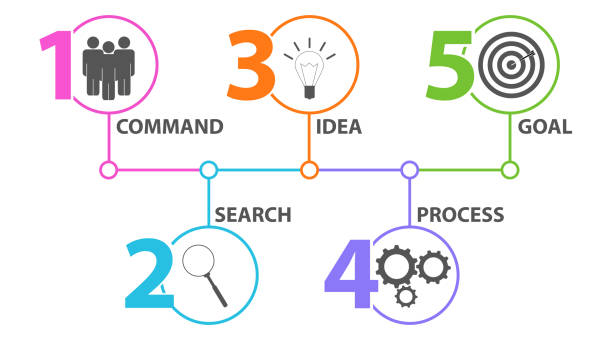
Evaluate Measurable Behavioral Goals
Ask the organizers and audience what specific behavioral changes they hope to see, such as:
- Will the audience make calls, arrange meetings, adopt new methods, buy products, or recommend to others after listening?
- How do these actions reflect goal achievement?
Using these measurable behavior indicators, you can define the core driving force of your speech.
Compare Current Audience Status with Ideal Goals
A successful speech should help the audience move from their current state toward the ideal goal. However, this “gap” needs to be managed carefully:
- Too small a gap means no novelty and little motivation for action;
- Too large a gap makes goals unrealistic, causing frustration and resistance.
Use your research to precisely locate this gap, ensuring your content is challenging yet realistic.
Step Two: Choose Memes, Calls to Action, and Speech Templates

With a clear understanding of your audience and goals, next build your speech’s core structure. The key elements include “memes,” “calls to action,” and selecting an appropriate speech template.
What Is a Meme?
A “meme” (from cultural transmission theory) refers to a core idea that is highly attractive, easy to remember, and spreadable. In speeches, a meme is the central point or innovative idea you want your audience to remember and share.
Successful memes should have:
- Originality: Feeling fresh and new;
- Relevance: Closely tied to the audience’s pain points or interests;
- Spreadability: Making the audience want to pass it on.
For example:
- “Understanding human thinking patterns is the first step to designing excellent products.”
- “Users’ needs differ vastly across technological eras.”
- “Mastering the seven human motivations can precisely unlock your team’s potential.”
Once the meme is established, your entire speech revolves around it.
Clarify the Call to Action (CTA)
The call to action is the specific behavior you want your audience to take after your speech. A strong CTA transforms your speech from mere talking into doing, achieving real impact.
CTAs might include:
- Trying a new tool or method;
- Purchasing your product or service;
- Spreading your ideas to more people;
- Changing certain work habits or lifestyles.
Defining your CTA early helps design your speech structure to support that goal.
Three Classic Speech Templates
- Numbered Template:
Break the meme into 3 to 10 key points and introduce them one by one—for example, five human thinking traits, each supported by stories and research. - Story Template:
Use a central narrative to link the speech, embedding facts and ideas within the story for easier understanding and emotional appeal. - Magic Speech Formula:
A practical structure including “Current State,” “Consequences,” “Solution,” and “Call to Action,” helping the audience clearly see the problem, realize risks, and accept the solution.
Step Three: Create Rich, Logical Content
With a clear structure, now you need to flesh out your speech content.
Use a Storyboard to Build the Content Framework
A storyboard is a visual planning tool that breaks your speech into sections, each containing core points and supporting materials.
Steps:
- Draw multiple boxes on paper or digital tools;
- Each box represents a topic or point;
- Write key points, examples, stories, or data inside each box.
This allows you to review the overall logic, reorder sections, and avoid omissions.
Employ Multiple Presentation Techniques
Combine stories, data, charts, images, and videos to improve audience understanding and emotional engagement.
For example, show data charts illustrating the current state, use a moving story to describe consequences, and vivid cases to explain solutions.
Use Scientific Evidence to Enhance Persuasion
Integrate neuroscience and behavioral psychology findings such as:
- The human brain is more sensitive to visual stimuli than text;
- Storytelling activates multiple brain regions, enhancing memory;
- Clear calls to action activate the brain’s reward system, promoting behavior.
These scientific bases make your speech more credible and trustworthy.
Step Four: Design Your Opening and Closing
Powerful Opening
The opening is crucial to capturing attention. A good opening should:
- Be brief (30–60 seconds);
- Clearly describe the current state, potential consequences, and your solution;
- Arouse curiosity and emotional resonance.
Starting with a compelling story, shocking data, or thought-provoking questions effectively boosts interest.
Closing with a Call to Action
The conclusion is equally important. Make sure the audience clearly knows what to do next. A clear and specific CTA turns “listening” into “doing,” driving tangible change.
Step Five: Refine and Practice Repeatedly
After designing your content, be sure to practice repeatedly:
- Adjust your speaking speed and tone to maintain attention;
- Time your speech to keep it concise and within limits;
- Simulate audience reactions, anticipate questions or objections, and prepare responses;
- Record and review your practice to identify and fix weaknesses.
Also, familiarize yourself with the venue and equipment beforehand to ensure technical smoothness.
Speechmaking is a skill blending science and art. By following these five steps — in-depth research, clarifying memes and calls to action, content building, opening and closing design, and repeated practice — you can craft speeches that are structurally solid and content-rich, maximizing audience engagement and action. Supported by neuroscience and behavioral psychology, your speech will have lasting impact, helping you achieve greater success both professionally and personally.