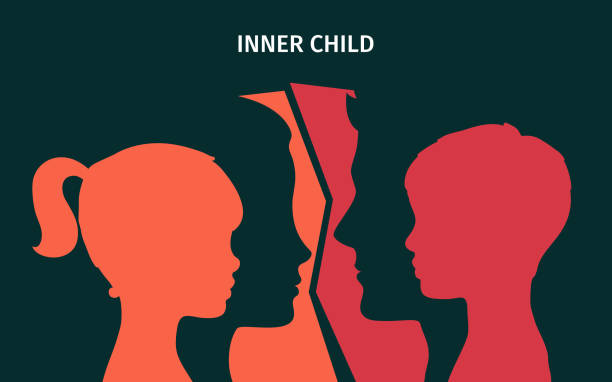
Deep within each of us lives a child who was never fully comforted. As children, we had to develop our own survival mechanisms to endure uncertain, fragile environments—some of us learned to please others, some became overly responsible, some always put others first, and some stayed on constant alert to avoid being ignored, scolded, or abandoned.
These mechanisms once served us well—they protected us and helped us “successfully” grow up. But in adulthood, they often become obstacles to happiness and intimacy, leaving behind a trail of unfinished emotional business and internal wounds.
As adults, we now have the power to heal. It’s time to use our adult wisdom and capacity to reparent that prematurely mature, self-sacrificing inner child—to gently hold the pain we once had to hide.
1. Embrace the Past: You Don’t Need to “Erase” Your Childhood
Many people seeking personal growth fall into a trap: they think they must completely “let go” of childhood wounds, erase all negative emotions, and become a trauma-free, relentlessly positive adult. But this urge to cut off the past is, in itself, a form of rejection toward the inner child.
True healing doesn’t mean eliminating the past—it means learning to live peacefully with it. The child you once were, who tried so hard to survive, was never a mistake. That child deserves your deepest gratitude. It was them who carried you through the storm.
So the first step is to say to your younger self:
“Thank you. You did the best you could.”
2. Let Go of the Myth of Radical Independence
Modern culture idolizes independence—especially for women. Strength is often measured by how little help we need. But this “independence myth” ignores a fundamental truth: no one is truly self-sufficient. The food we eat comes from farmers, the homes we live in are built by workers, and the water in our taps flows thanks to vast systems of cooperation.
Emotionally, we’re the same. We need connection, empathy, and companionship. We long to be seen, heard, and validated. A self cut off from others is like a plant uprooted—it may look free, but it is destined to wither.
Real maturity is not the absence of dependence; it’s the ability to choose healthy interdependence. We can be strong and still allow ourselves to be vulnerable, open, and emotionally honest. We can allow ourselves to believe: “I don’t have to be perfect to be loved.”
3. Belonging Comes from Being Real, Not Performing
We all crave belonging—a space or relationship where we can simply be. Yet many people suppress their true selves to “fit in.” They push themselves to be funny, charming, successful, or cheerful, only to feel increasingly alone.
But true belonging never requires performance. It allows for authenticity.
Remember: the people truly worth being close to are the ones who accept your whole self. They won’t pull away when you’re down. They won’t accuse you of being “too sensitive” when you express your needs. They’ll stay and listen—even if your words are imperfect.
That’s the kind of relationship that nourishes inner safety—the soil where healing takes root.
4. Reclaim Your Power in Relationships: From Expecting Change to Making Choices
As children, we had no control over who cared for us. We adapted to survive—often through people-pleasing, emotional suppression, or hyper-vigilance, hoping that being “good” would earn love.
In adulthood, these patterns can bleed into romantic, parental, and professional relationships—trapping us in a cycle of silent resentment and self-denial.
But the greatest freedom of adulthood is choice.
You have the right to walk away from relationships that make you feel guilty or controlled.
You have the right to set boundaries and say what you will and will not accept.
You have the right to do what truly matters to you—without anyone’s approval.
You don’t need to prove yourself to the world. You just need to be honest with yourself.
5. Building Healthier Connections: 5 Common Conflict Patterns and How to Break Them
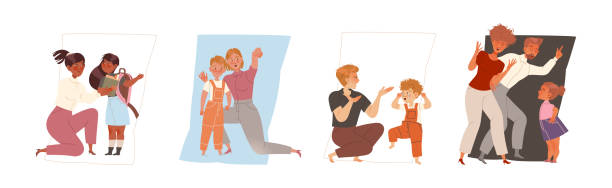
Even the most self-aware people experience misunderstandings, tension, and conflict. The goal isn’t to avoid conflict—but to navigate it wisely. Here are five common patterns that hinder intimacy, and how to resolve them:
1. Mismatch in Thought-Feeling-Action Responses
People react to conflict in different ways—some think first, some feel first, some act immediately. When styles don’t match, we may hear accusations like, “Why haven’t you done anything?” or “Why don’t you feel anything?”
Solution: Respect each other’s rhythm. Slow down. Empathize before you strategize. Understanding must come before fixing.
2. “You’re the Problem” Thinking
This mindset dominates many arguments—“It’s all your fault.” We criticize others for being inconsiderate or inflexible, rarely asking: “Did I express myself clearly?” or “Am I assuming the worst of them?”
Solution: Center the conversation on your feelings and needs, not their character.
Saying “I feel unimportant” is more constructive than “You don’t care about me.”
3. Good Guy vs. Bad Guy Thinking
During conflict, we often polarize: I’m the victim; you’re the villain. But this binary labeling only deepens defensiveness and kills communication.
Solution: Drop the labels. Stick to feelings and observable facts.
Not “You’re lazy,” but “When you don’t help with this, I feel unseen.”
4. Fact Tennis
You have your facts, they have theirs. You bring an example, they fire back with another. It becomes a rally of rebuttals—exhausting and unproductive.
Solution: Logic might win minds, but emotion wins hearts.
Focus less on “winning” and more on being understood.
5. The Drama Triangle: Victim, Rescuer, Persecutor
Many relationships fall into unconscious roles: one person feels victimized, another attacks, and someone else jumps in to “fix” everything. Eventually, everyone feels drained.
Solution: Break the cycle. Stop playing roles.
Don’t say “You always do this”—say “This matters to me, and I’d like you to hear me out.”
6. Redefining Love: From Pleasing to Real Connection
Many of us never learned what love really is. We thought it meant sacrifice, suppression, or earning approval. We tried to be good enough to be kept.
But true love is about mutual recognition.
It’s not about never getting angry or upset. It’s about having space to express those emotions and still being met with care. It’s hearing, even in your messiest moments:
“I’m still here.”
To love yourself as an adult is to love wisely, authentically, and with strength.

7. Heal Through Relationships, Rebuild Relationships Through Healing
Humans are relational beings. We don’t grow in isolation. Our personalities, beliefs, and habits are shaped through countless interactions.
Healing, too, isn’t a solo mission. You can explore alone, but you also need mirrors—people who reflect who you are and who you could become.
When your adult self turns back to comfort your inner child, replaces criticism with compassion, and trades shame for acceptance, you begin to realize:
The past no longer controls you. You can finally become the person your younger self needed.
Final Thoughts
Your past is not your destiny.
You are not your wounds. You are not your defenses.
You can carry them, but they do not define you.
The greatest power of adulthood isn’t money, status, or image.
It’s the willingness to show up for the child inside you who still aches.
We spend our whole lives trying to get “home”—but home is really just the inner space where every part of you is welcome.
May you stop blaming your younger self.
May you meet them again with the gentle strength of who you are now.
And may that meeting be the beginning of your true healing.