
When we think about changing our lifestyle—whether it’s losing weight, quitting smoking, sleeping early, or saving money—we often focus on personal willpower, goal setting, and discipline. But a growing body of research shows that our choices may not be as individual as we think. In reality, our behaviors are deeply shaped, even “infected,” by the people around us. This is the phenomenon known as behavioral contagion.
To truly understand how the world influences us, we must face an important truth: we do not live in a vacuum, but in an interconnected web of social influence. As Professor Nicholas Christakis puts it, “Our health and behavior spread through social networks much like infectious diseases.”
1. Smoking’s Hidden Contagion: More Than Just Secondhand Smoke
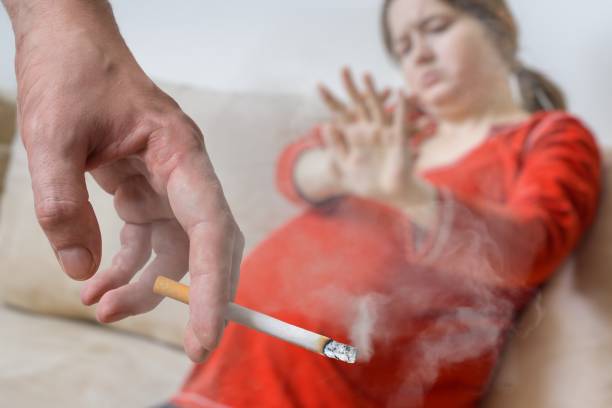
We often hear about the dangers of secondhand smoke, but what’s even more dangerous—and overlooked—is that the act of smoking itself is contagious.
Studies show that the best predictor of whether someone will start smoking isn’t their knowledge of smoking’s risks or exposure to anti-smoking campaigns. Instead, it’s how many of their friends smoke. If the percentage of smokers in someone’s social circle rises from 20% to 30%, their likelihood of becoming a smoker jumps by about 25%.
In other words, smoking isn’t just a personal habit—it’s a social behavior that spreads through networks. When one person starts smoking, their friends are more likely to follow, and their friends’ friends may be affected too.
Behavior spreads like a virus. You’re not just smoking alone—you’re making it easier for others to smoke too.
This is the true danger of behavioral contagion: it subtly redefines what’s “normal.” As more people in a group smoke, non-smokers become desensitized, perhaps even tolerant, to the habit.
2. How Our Environment Quietly Rewires Our Thinking
Behavioral influence doesn’t only come from direct imitation. Our environment also reshapes our judgment system without us even realizing it.
Our brains are wired to judge things relatively, not absolutely. Consider this example: If you’re driving 20 kilometers to your grandfather’s house and you have 15 kilometers left, you might say, “It’s still a long way.” But if your journey is 200 kilometers total and you only have 15 left, you’d likely say, “We’re almost there!” Same distance, completely different perception—because your brain is using context, not facts, to evaluate the situation.
Even our perception of temperature is relative. At 16°C, someone in Montreal during a cold March might say, “It’s warm today,” while someone in Miami in November might feel it’s “a bit chilly.”
These relative judgments show how our environment defines what we think is “normal”, influencing decisions ranging from our health to how much we spend.
3. Eating, Exercising, Saving: We Learn Habits from Others

Why do you eat the way you do? Why do you work out (or not)? You might say it’s personal preference or physical need. But in many cases, we act a certain way because others around us do.
A famous Harvard study revealed that if a friend becomes obese, your chances of gaining weight increase by 57%. If it’s a sibling, the risk rises by over 40%. If your spouse gains weight, your odds go up as well.
These patterns suggest that behaviors like weight gain aren’t just about genes or discipline. They’re social phenomena, passed through mimicry, normalization, and emotional alignment.
That’s why obesity often clusters in groups. People aren’t randomly overweight at the same time—they influence each other to redefine what’s acceptable, gradually normalizing unhealthy patterns.
4. The Brain’s Hidden Engine of Imitation: Mirror Neurons
Our ability to mimic others isn’t just coincidence—it’s rooted in neuroscience. Our brains contain a special system called the Mirror Neuron System (MNS).
This system activates the same brain areas when we see someone performing an action as when we do it ourselves. That’s why when someone yawns, you yawn too. When someone smiles, you instinctively smile back. When someone eats, your brain fires neurons related to eating—even if you’re not hungry.
Mirror neurons are the foundation of empathy, social bonding, and shared behaviors. In essence, humans are biologically programmed to “catch” other people’s actions and emotions.
This also means that if you’re surrounded by negativity, laziness, or unhealthy habits, you’ll begin to unconsciously mirror those behaviors—and pass them along.
5. The Subtle Power of the Information Cascade: Why We Follow the Crowd
There’s another form of behavioral contagion called the information cascade. This occurs when people, lacking full information, copy others’ behavior, assuming their choices are informed.
Imagine passing two restaurants—one packed, the other empty. Without knowing anything else, you’ll likely choose the busy one. “If so many people picked it, it must be good,” your brain reasons.
This instinct to copy others in uncertainty shows up everywhere: deciding whether to buy a house, how many kids to have, getting plastic surgery, using new tech, or even breaking the law.
Criminologists have found that crimes like burglary and car theft exhibit strong contagion effects, where one incident increases the chances of similar acts in the same area, driven by mimicry and social signals.
6. Social Comparison and the “Status Anxiety” Trap
One of the most damaging offshoots of behavioral contagion is positional consumption—we don’t just want good things; we want better things than others.
People don’t necessarily want bigger houses—they want bigger houses than their peers. This status-seeking drives a ripple effect: wealthy individuals set a high bar, middle-class families stretch themselves to keep up, and lower-income groups are pressured to overspend in turn. This creates a “spending cascade” that fuels debt, anxiety, and environmental strain.
We don’t just want to be happy—we want to be happier than others. And that mindset leads to chronic dissatisfaction and stress, no matter how much we already have.
7. Breaking the Chain: How to Defend Against Negative Contagion
So how do we protect ourselves from harmful behavioral contagion and instead amplify positive influence?
- Audit your social circle: Are your friends healthy, motivated, disciplined? If not, it might be time to seek new relationships that support your goals.
- Question your assumptions: Much of what we think is “our decision” is just social reaction. Learn to spot when you’re being influenced.
- Design your environment: Join a running club, follow health-focused influencers, or work in spaces where productivity is the norm. Small environmental tweaks can lead to big behavior shifts.
- Policy and public health must consider contagion: Governments and organizations can use social modeling and “default settings” to create healthier communities—like promoting walkable neighborhoods, banning smoking in public spaces, and celebrating healthy lifestyles.
Final Thoughts: You’re Not Alone in This—And That’s a Good Thing
Every habit you have—what you eat, how you sleep, how you manage emotions—isn’t just about you. It’s also about who you’re around.
The first step to personal change isn’t blaming yourself for not being disciplined enough. It’s recognizing and redesigning your behavioral environment. The small interactions you have each day may be shaping your life far more than you realize.
So, want to become healthier, happier, or wealthier? Maybe the place to start is simple:
Change your circle, and you might just change your life.