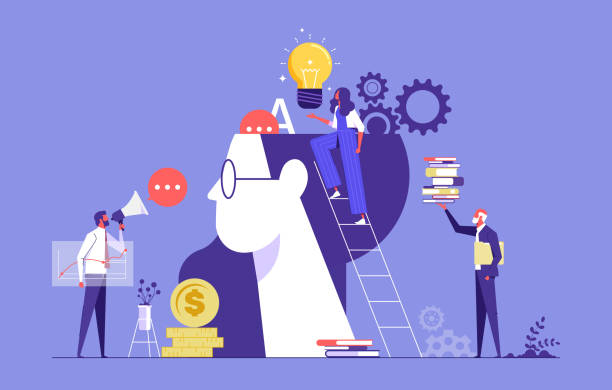
We often say “you’re never too old to learn,” but few people truly master the art of effective learning. Why is it that some people seem to pick up new skills quickly and retain vast amounts of information, while others feel like they forget everything they learn? The difference isn’t just in IQ—it’s in how they use their brains.
Just as building physical strength requires understanding muscle structure, recovery, and training cycles, developing mental capabilities requires working with—rather than against—how the brain functions. Think of your brain as a muscle that can be shaped: it needs warm-ups, resistance, recovery, and deliberate stimulation over time.
In this guide, we’ll explore the neuroscience behind learning, clarify what really affects memory and understanding, and provide a set of actionable methods that will help you train your brain the same way you would train your body.
1. Your Brain Is Not a Container for Information—It’s a Processor
Many people approach learning as if the brain were a bucket to be filled: the more you pour in, the more you retain. But the brain isn’t a passive storage tank—it’s an active processor.
From a neuroscience perspective, two major brain systems shape our learning experience:
- Prefrontal Cortex: Responsible for logic, focus, decision-making, and deep learning. This is your brain’s “command center.”
- Limbic System: Governs emotions, instincts, and motivation. It reacts strongly to stress, anxiety, and threats—and can easily hijack your attention.
Efficient learners are those who engage the prefrontal cortex rather than being ruled by emotional interference. If you’re constantly anxious, fatigued, or distracted while studying, it’s like trying to lift heavy weights when you’re sick—your performance suffers.
2. The Three Core Phases of Learning: Intake, Integration, and Retention
To develop a high-performance learning system, it’s essential to understand how the brain processes information through three stages:
1. Information Intake: Clean and Efficient Input Channels
If information can’t enter the brain properly, no memory technique will work. Effective intake requires meeting three key conditions:
- Manageable Cognitive Load: Your brain has a limited processing capacity. When overwhelmed, it enters “survival mode,” and learning stops. Cognitive load has three components:
- Intrinsic load: The complexity of the material itself.
- Extraneous load: How clearly the material is presented.
- Germane load: Whether new content connects with what you already know.
- Emotional Management: Stress limits your brain’s focus. The Yerkes–Dodson Law shows that moderate pressure can enhance performance, but too much causes breakdown. Finding your “cognitive sweet spot” is key to learning effectively.
- Multi-Channel Learning: While you might prefer visual, auditory, or kinesthetic learning, don’t limit yourself to just one mode. Combining reading, watching videos, handwriting notes, and speaking aloud creates richer neural connections and deeper memory.

2. Information Integration: Real Learning Begins With Understanding
Absorbing content is only the start. True learning happens when the brain actively processes and understands the information. You don’t remember something because you memorized it; you remember it because you understood it deeply.
Bloom’s Taxonomy of Cognitive Skills
Psychologist Benjamin Bloom proposed a six-level framework for learning, progressing from basic to advanced thinking:
- Remembering: Recalling facts and definitions.
- Understanding: Explaining or paraphrasing ideas.
- Applying: Using knowledge in new contexts.
- Analyzing: Breaking down information into components.
- Evaluating: Making judgments or critiques.
- Creating: Designing new ideas or solutions.
For example, learning calculus isn’t just memorizing formulas—it’s about understanding how to apply them and even designing your own problem-solving methods.
The SQ3R Method for Deep Reading
To absorb books or courses more effectively, try this proven five-step technique:
- Survey: Skim the material to get an overview and create a mental map.
- Question: Ask questions about what you’re about to read to trigger curiosity.
- Read: Read actively and thoroughly.
- Recite: Summarize what you learned in your own words.
- Review: Revisit material regularly to reinforce learning.
3. Information Retention: Memory Is Reconstruction, Not Storage
Many people assume that memory is like saving files on a computer—learn something once, and it’s stored forever. But memory is dynamic—it needs to be recalled and reconstructed regularly to stick.
Three Types of Memory Retrieval:
- Recall: Retrieving information without cues. It’s difficult but builds the strongest memory.
- Recognition: Identifying the right answer when prompted.
- Relearning: Picking something up faster the second time around.
Forgetting is your brain’s way of filtering out the irrelevant. It doesn’t mean you have a poor memory—it means the brain didn’t see a reason to keep the information. What’s missing is enough encoding-retrieval-reinforcement cycles.
The Ebbinghaus Forgetting Curve
Psychologist Hermann Ebbinghaus found that people forget information rapidly within 24 hours, but spaced repetition slows down forgetting dramatically.
To retain what you learn:
- Review within the first 24 hours.
- Then review again on day 3, day 7, day 14, and at the 1-month mark.
- Use Spaced Repetition Systems (SRS) to make this process automatic and efficient.
3. The Psychological Foundations of Learning: Fix the Real Problem Behind “I Can’t Learn”
Many people begin learning from a place of doubt: “I’m just not smart enough.” This belief quickly turns into mental fatigue and demotivation. Often, the real issue isn’t the difficulty of the subject—it’s:
- Low self-belief: Assuming you can’t do it leads to avoidance.
- Poor self-management: No clear goals, no plan, chronic procrastination.
- Wrong starting point: Jumping into advanced material without addressing foundational gaps.
The Base Layers of the Learning Pyramid:
- Confidence: Believing that you can learn—even if it’s slow at first.
- Self-Management: Building habits, tracking progress, reviewing regularly.
- Strategy: Using techniques that match your style and are sustainable.
Before you pile on more knowledge, clear out the mental blocks that prevent you from learning. Otherwise, no technique will save you from chronic learning anxiety.
: Let Your Brain Grow Like a Muscle
If you understand that building muscles requires progressive overload, recovery, and repetition, then you’ll also understand this:
Training your brain requires the same principles: science-based methods, consistent practice, and self-awareness.
Learning is not an inborn talent—it’s a skill you can train.
- Treat memory like a practiced skill, not a gift of luck.
- Treat understanding as an active process, not passive absorption.
- Treat revision as a required cycle, not a waste of time.
Starting today, train your brain like you train your body. Once you understand how learning works, you can work smarter—not harder—and turn knowledge into personal power that continuously propels your life forward.