How Environment Shapes Our Life Trajectory

We often believe that our thinking and behavior are entirely under our own control. However, in reality, the environment profoundly influences our cognition, emotions, decisions, and even the entire experience of life. If you do not understand how your cognition forms or the impact of your environment on you, you may fall into misunderstandings, make poor judgments and decisions, and even act in ways that backfire, hindering your personal growth.
So, the question is: How can you effectively exert your autonomy and truly take charge of your life? How can you leverage the understanding of environmental influence mechanisms to achieve self-improvement and sustainable development?
This article will draw on the latest research in psychology and neuroscience—especially embodied cognition theory, brain neuroplasticity principles, perception training methods, and the unveiling of cognitive biases—to deeply explore how self-cognition is continuously reshaped by environmental changes and offer practical advice to help you become the true master of your life.
1. Perception: The Key Bridge to Constructing Self-Cognition
Our perception is not just a passive reception of external stimuli; it is fundamentally an active constructive process. Through perception, we understand, interpret, and ultimately shape our self-cognition.
1.1 Embodied Cognition: The Deep Link Between Senses and Cognition
The theory of embodied cognition in psychology points out that cognition does not exist solely in the brain but is a product of interactions between the body and environment. Our body posture, movements, and even unconscious small actions influence our emotions and decisions. For example, standing tall with your chest out and head up makes you feel more confident; conversely, lowering your head and slumping your shoulders can make you feel down.
This sensation-movement loop actually shapes our emotional experiences and self-evaluations. Facial expressions and body postures not only reflect inner states but also activate specific emotional and cognitive patterns in return. This shows that bodily sensations are a vital part of cognitive experience and form the foundation for understanding ourselves and others.
1.2 Personalized Perception and Environmental Shaping
Our perception is not objective but is profoundly influenced by personality, desires, past experiences, living environments, and expectations for the future. Everyone’s “cognitive filter” differs, leading to vastly different understandings of the same events or information. These cognitive filters are the cornerstones of our self-construction.
The environment acts as a silent driving force in this process. Whether it is the physical environment (like lighting and spatial layout) or the social environment (culture, media, social relationships), they subtly shape our perception and thinking patterns.
2. Brain Neuroplasticity: Infinite Possibilities for Cognition
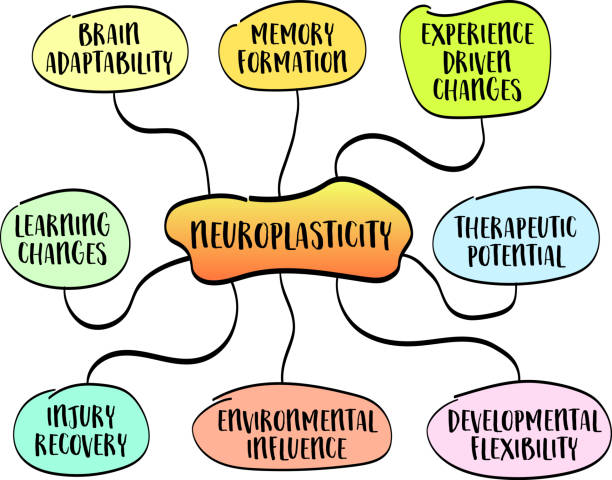
2.1 Overview of Brain Plasticity
Modern neuroscience has discovered that the brain is not a fixed, unchanging organ but a highly plastic, complex system capable of continuously reshaping its structure and functions according to experiences. Neuroplasticity manifests as the formation of new synapses, reorganization of neural circuits, and functional shifts.
This means that even after adulthood, we can change how our brain works through environmental stimulation and training, thus transforming cognition and behavior.
2.2 Interaction Between Brain and Environment
A core feature of the brain is its predictive ability—it anticipates the future based on past experiences and guides our reactions to the environment. As the environment constantly changes, the brain keeps adjusting to adapt.
When certain sensory inputs decrease or fail, the brain reallocates resources to enhance other sensory abilities. This reorganization ability provides scientific support for overcoming adversity and developing potential.
3. Sensory Integration and Perception Training: Building a Sharp Self-Perception System
3.1 Diversity and Cooperation of Senses
Besides the traditional five senses (sight, hearing, touch, smell, taste), we also possess bodily senses (such as proprioception and balance) and more complex systems like emotional perception. These senses cooperate to form our holistic experience of the world.
For example, the taste of a meal is influenced not only by taste buds but also by sight and smell. Meanwhile, the perception of body posture affects our emotions and decisions.
3.2 Training Perception to Enhance Cognitive Control
Through perception training, we can develop sensitivity to subtle environmental signals and reduce the chances of being misled by implicit information. For example, practicing awareness of small bodily changes, paying attention to environmental details or emotional responses helps break unconscious cognitive traps and improve self-regulation.
4. Common Cognitive Traps and How to Overcome Them
4.1 Anchoring Effect: The “Fixed Mindset” Trap
The anchoring effect is a typical cognitive bias: we tend to overly rely on the first piece of information we receive as an “anchor,” making it hard to break free from this limitation.
For example, when you hear a price, your subsequent judgment about price is influenced by that number. Buyers and sellers often use this psychological tactic during bargaining.
How to Break the Anchoring Effect?
- Learn to identify and question “anchors,” especially small pieces of information that seem irrelevant but subtly influence your judgment.
- Clarify your core needs and standards before making decisions, and avoid being easily swayed by external influences.
- Reflect on changes in your self-cognition and examine whether past experiences and current needs have truly changed.
4.2 Time Preference and Instant Gratification
Humans generally prefer immediate rewards, even if future rewards are more substantial, making it difficult to resist present temptations. This time preference affects saving, investing, and health management.
Suggestions
- Cultivate long-term vision and adjust behavior based on your future expectations.
- Set clear goals and reward mechanisms, breaking long-term goals into smaller milestones to reduce procrastination.
4.3 Repetition Effect and Fixed Cognition
The psychological effect of “repetition equals truth” makes people tend to believe information they hear repeatedly, even if it is not entirely accurate.
How to Respond?
- Maintain sensitivity and critical thinking toward information; avoid blindly accepting repeated information.
- Use positive affirmations actively to strengthen positive self-cognition and beliefs.
4.4 Sunk Cost Fallacy
People are often unwilling to abandon poor choices because of already invested time, money, or emotions, even when continuing causes greater losses.
Suggestions
- Evaluate input and return timely and learn to decisively give up hopeless choices.
- Shift attention to more valuable new opportunities to reduce the risk of “gambler’s fallacy.”
4.5 Cognitive Dissonance and Belief Perseverance
Even when confronted with information conflicting with their beliefs, people often maintain original views through psychological mechanisms and resist change.
How to Open Your Mind?
- Consciously gather diverse information and actively try to see from others’ perspectives.
- Learn to examine your beliefs at a meta-cognitive level and maintain moderate cognitive flexibility.
5. Becoming the Master of Your Life: From Cognitive Awakening to Environmental Reshaping
We cannot change every external environment, but we can optimize our cognition and behavior by understanding and choosing environments. Changing your environment—such as adjusting your workspace layout, selecting a supportive social circle, controlling information intake—is an effective way to reshape cognition.
Meanwhile, actively training perception, breaking old cognitive patterns, and constantly challenging self-limits are essential steps toward cognitive freedom.
Cognition is not fixed but a process that evolves through interaction with the environment. By understanding how the environment shapes cognition, training keen perception, being aware of cognitive biases, and daring to change, each of us can hold the key to transforming cognition and begin a new chapter of self-improvement and sustainable growth.
When you learn to change your environment, you truly start the journey of changing cognition and changing your life.