
The formula of self-discipline:
Self-discipline = (Personal Motivation + Positive Benefits) − (Discomfort + Distractions)
The key to maintaining self-discipline lies in whether your internal motivation and the positive rewards you get from your actions can outweigh the discomfort and various distractions during the process. Once your motivation and positive outcomes surpass the negative experiences, sticking to self-discipline becomes natural and effortless—just like drinking water and eating every day.
In reality, many people find it hard to sustain self-discipline because they haven’t truly understood their own “discipline style,” nor found the method that best suits them to maximize motivation and minimize obstacles. If you can clearly understand yourself and adjust your strategy accordingly, achieving your goals won’t feel so far away.
Self-discipline: Mental strength triumphs over material temptations
At its core, self-discipline means prioritizing mental strength over material desires—it’s precise control over your own behavior. However, controlling your brain is not easy. Imagine asking yourself to walk on the sun’s surface—that sounds almost impossible. Our brains contain many barriers constantly challenging our willpower.
Psychological research identifies five major mental obstacles to self-discipline:
- Sensory temptations: Yielding to visual, auditory, or taste stimuli, making it hard to resist immediate pleasures.
- Hostility and malice: Negative emotions disrupt focus and peace of mind.
- Apathy and laziness: Lack of motivation and willingness to act, preferring to avoid effort.
- Anxiety and regret: Inner restlessness and remorse over the past weaken drive.
- Hesitation and doubt: Overthinking and indecision block making choices.
These obstacles demand your attention, even when they aren’t truly urgent. The deeper you sink into the whirlpool of current sensations and emotions, the more distant your future goals and self-discipline become.
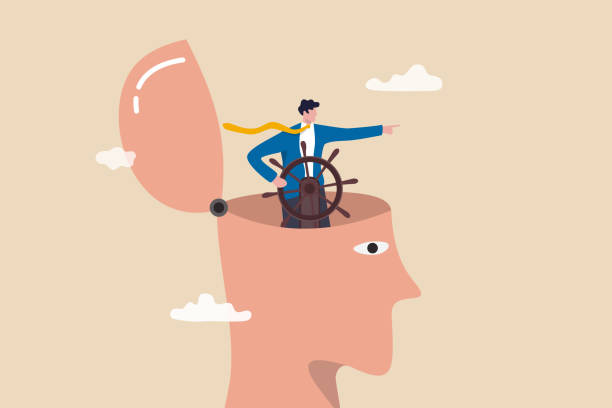
Dopamine and the pleasure principle: Why does self-discipline often feel painful?
Human behavior is deeply influenced by the neurotransmitter dopamine. Dopamine drives us to seek instant pleasure and avoid pain, often subconsciously. Self-disciplined actions are often accompanied by short-term discomfort—like procrastination, fatigue, and psychological stress—making persistence extremely difficult.
The real challenge is to adjust how we perceive “pleasure” and “pain,” and decide who the “beneficiary” is: the present self or the future self? Self-discipline is an investment in your future self. Learning to see self-discipline from a long-term perspective helps you overcome immediate pain and temptations.
Time orientation: Present-focused vs. Future-focused
Another key to self-discipline is time orientation. Many people focus only on immediate gratification—this is present-oriented thinking, which severely weakens self-discipline. In contrast, future-oriented people keep their eyes on long-term goals and plan current actions accordingly. Like the fable of the ant and the grasshopper: the ant works hard to prepare for winter, while the grasshopper only seeks pleasure now and suffers later.
To be self-disciplined, you must cultivate future-oriented thinking, planning backward from your goals and prioritizing long-term benefits.
Freedom through self-discipline: You hold the power of choice
Despite obstacles, whether you can be self-disciplined ultimately depends on you. Psychology’s placebo effect shows: how much you believe you can achieve often determines how much you actually do. This is a tremendous freedom and power because nothing can stop you except yourself.
Self-discipline is not restriction but the path to freedom. Treat it as a challenge, an opportunity to break through yourself—not a burden.
Understanding the cycle of self-discipline and breaking the vicious loop
Many people think self-discipline is isolated moments of action, but it’s actually a cycle made of multiple factors. This cycle often contains traps of laziness:
- Unhelpful assumptions: e.g., “Life’s too short; I shouldn’t waste time washing the car.”
- Avoiding responsibility: Feeling the task is boring but choosing to escape.
- Making excuses: Rationalizing avoidance, like “It’s too hot outside to wash the car.”
- Substitute avoidance: Numbing yourself by doing other things, like cleaning the bathroom.
- Consequences of avoidance: Temporary comfort but eventual guilt and negative emotions.
You may find yourself sinking deeper into this whirlpool, draining willpower and motivation. To break the cycle, you must understand each stage and tackle them scientifically one by one.

Practical strategies for the five stages of the cycle
- Unhelpful assumptions: Use the 40% rule to encourage yourself—you’ve already completed 40% of the journey; the rest won’t be hard.
- Expecting discomfort: Actively practice tolerating discomfort to build mental resilience. Imagine discomfort as temporary; you will grow stronger.
- Reframing excuses: Learn to identify and redefine excuses to avoid self-deception. Tell yourself, “This is just an excuse; I’m fully capable of finishing this.”
- Identifying avoidance behaviors: Clarify what avoidance looks like for you and proactively eliminate distractions and temptations.
- Managing consequences: Face the negative impact of unfinished tasks and turn them into motivation.
To do or not to do? Honest self-examination
Self-discipline requires honest questioning of yourself. Keep asking:
- Does this behavior widen the gap between my ideal self and current self?
- Does this action align with my true intention?
- Am I avoiding this just because it’s uncomfortable?
- If there’s no other choice, what can I do?
- Is “I don’t want to” a reasonable excuse?
- Am I doing the right thing or just the easy thing?
By asking these questions, you realize the true obstacles are often not external conditions but your attitude and inner choices.
The neuropsychology behind self-discipline
Facing the limits of your brain, continuous self-assessment and adjustment are needed. Regularly rate yourself on mission clarity, mentor support, vision clarity, confidence, planning ability, learning mindset, patience, and work attitude to identify gaps.
- Mission clarity: Discover values and set clear goals.
- Mentors and support: Actively build positive support networks.
- Vision clarity: Use visualization and vision boards to concretize goals.
- Confidence: Face failure and rejection positively; cultivate self-compassion.
- Planning and organization: Declutter workspace; use time management tools.
- Learning and patience: Keep learning; focus on gradual change.
- Work attitude: Treat work as your choice, not a burden.
Specific methods include:
- Organize your desk to reduce clutter.
- Install apps that limit internet distractions.
- Use a big calendar to track timelines clearly.
- Focus daily on only the top three important tasks.
- Automate repetitive trivial tasks.
- Keep weekend reviews and reflections.
- Apply the 80/20 rule—focus on key actions.
- Avoid multitasking; practice “deep work.”
Building daily habits: Making self-discipline automatic
Self-discipline is tightly linked to habit. Habits are the ultimate goal of self-discipline—automatic responses that no longer require conscious effort.
Keys to forming habits:
- Remember the self-discipline formula; always evaluate motivation and obstacles.
- Use “If-Then” statements to guide decisions, e.g., “If I feel procrastination, then I will work for 5 minutes immediately.”
- Clarify if you are better suited for moderation-style discipline (flexible adjustment allowed) or abstinence-style (zero tolerance).
The mindset for making self-discipline effortless
Sticking to self-discipline doesn’t have to be painful or require brute willpower. Understanding its psychological mechanisms, time orientation, obstacle cycles, and targeted methods, and adjusting attitude and behavior, you can turn self-discipline into a habit, making it as simple and natural as drinking water and eating.
Believe in your power to control your life. Embrace the true freedom that self-discipline brings. Start today and take your first step toward freedom through self-discipline!