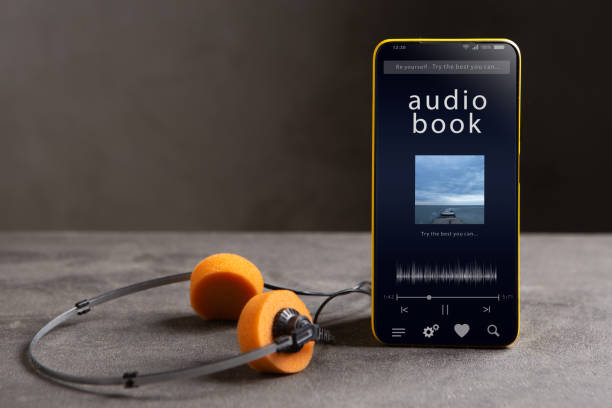
With the rise of smartphones and audio platforms, audiobooks have become a popular way for many to gain knowledge and entertainment. However, compared to traditional print or e‑reading, they differ significantly in information fidelity, attention focus, memory retention, and knowledge processing. Understanding these differences—and then tailoring your study methods accordingly—can help you maximize the strengths of both listening and reading.
1. Information Transmission: Layered “Distortion” vs. Direct Access
- From Source Material to Published Book: First “Loss”
A non‑fiction or professional book often draws on multiple papers, research studies, or the author’s own ideas. In writing, the author must select, summarize, and rephrase vast amounts of material—inevitably “losing” details and arguments from the original sources. - Translation Drift: Second “Shift”
Translating an English original into Chinese introduces another layer of potential error. The translator’s subject‑matter knowledge, depth of understanding, and language skill all affect the quality. Under market pressure for low cost and fast turnaround, machine translation plus light editing and multi‑tier subcontracting often lead to mistranslated terms, oversimplified arguments, and missing nuances. - Audiobook Adaptation: Highest Information Loss
Most audiobooks hire a scriptwriter to extract the book’s key points and then have a narrator record the audio. To keep episodes concise, scriptwriters drastically cut examples, evidence, and context—retaining only a handful of “takeaways.” This “second round of trimming” typically produces far more distortion than that introduced during translation. Complex, systematic arguments especially suffer when boiled down to a few punchlines. - Listening Environment & Distractions: Added “Noise”
People often listen while commuting, doing chores, exercising, or multitasking. Too many distractions mean even the clearest narration can’t guarantee full comprehension—missing one point often breaks the thread of an entire line of reasoning, forcing repeated rewinds.
In : From the original manuscript to your ears, content passes through author drafting → translation/adaptation → audiobook scriptwriting → listener reception. Each step risks distortion. By contrast, reading yourself is a direct path—text → brain—skipping one or two layers of “filtering” for more complete detail and argument retention.

2. Focus vs. Distraction: “Deep Reading” vs. “Fragmented Listening”
- Single‑Task Reading
In a quiet setting, your eyes follow the text at your own pace. You can pause to re‑read, annotate, and reflect, sustaining 30 minutes to several hours of “deep reading.” - Multi‑Task Listening
Most audiobook sessions occur during driving, commuting, cooking, or exercising—activities that demand sensory and cognitive resources. Even a skilled narrator’s key points can slip by unnoticed amid the noise.
Tip:
- For fiction or light entertainment, audiobooks fit well into multitasking routines.
- For professional, concept‑dense material, schedule focused listening sessions with minimal distractions.
3. Memory & Forgetting: Why the Brain “Devalues Easy Knowledge”
- Ebbinghaus Forgetting Curve
Without review, we lose nearly 50% of new information within one hour—regardless of listening or reading—and continue to forget more over the following weeks. - Effortful Encoding = Stronger Impressions
Studies show the brain prioritizes information that required effort to acquire. Audiobooks, because they require less active engagement, often become “listen‑and‑forget” content. - Three Keys to Memory Reinforcement
- Repetition: Replay audiobooks; re‑read book chapters.
- Output: Take notes, build mind maps, create flashcards.
- Contextual Linking: Tie new insights to personal experiences, work projects, or case studies to create “memory hooks.”
Advice: Only by actively annotating, note‑taking, questioning, discussing, and producing output will your brain treat the knowledge as important.
4. Knowledge Processing: From “Passive Intake” to “Active Creation”

4.1 The “Three‑Circle” Method (from Knowledge into Action)
- Extract & Organize: Highlight, annotate, and distill each useful concept—its core message, application scope, and limitations.
- Craft Memorable Quotes: Condense major ideas into one or two easy‑to‑remember “soundbites.”
- Anchor in Stories: Link each quote to a real‑world example or personal anecdote, building a narrative bridge that deepens understanding and recall.
4.2 The “Ten‑Question” Reading Framework
- What is the core content? (Summarize in 1–2 tweets)
- What’s worth recording? (Key excerpts + digital notes)
- What problem is the author solving?
- Which arguments merit scrutiny—and why?
- How does this relate to me? (Insights gained + practical applications)
- Visualize it: Create a mind map or chart.
- Integrate with prior knowledge: Tell a story that weaves old and new concepts.
- What’s the next action?
- Produce: Write an article, give a presentation, teach a mini‑class, etc.
- Reflect after application: Update your views based on real‑world feedback.
Note: Fully implementing this process takes more time than “listening once” or “reading once,” but that effort ensures the material truly roots in your mind.
5. Audiobook vs. Reading: When to Choose Each
| Use Case | Recommended Format | Why |
|---|---|---|
| Light Entertainment / Fiction | Audiobooks | Lively narration; fits into multitasking |
| Deep Professional Learning | Read + Annotate | Complete information; instant cross‑reference |
| Commuting / Chores | Curated Audiobook | Quick overview; follow up with notes or replay |
| Initial Book Selection | Audiobook Summaries | Preview content before deciding to read |
- Audiobooks offer convenience and “overview” in stolen moments, but come with higher risks of information loss and forgetting.
- Reading demands focus and active processing to achieve deeper comprehension and long‑term retention.
Whichever format you prefer, combine it with the Three‑Circle Method, the Ten‑Question Framework, or similar systematic approaches. Only through active participation, reflection, and application can knowledge transform from fleeting audio waves or passing text into enduring personal expertise.