
In this era of rapid transformation, we are entering an unprecedented “skills arena” where global competition, AI integration, and evolving organizational models are reshaping the future of work. The jobs of tomorrow won’t revolve around routine execution, but rather high-level problem-solving and cognitive challenges.
In such a world, what kind of abilities will truly stand out?
This question is no longer just about employability—it’s about remaining irreplaceable in a volatile world and unlocking your fullest potential.
We define “skills” as a core set of transferable competencies that apply across industries and situations. They encompass more than academic qualifications or technical knowledge—they reflect your behavior, mindset, adaptability, and long-term value creation potential. These skill sets not only open up broader career paths but also empower you to rise to key opportunities when they matter most.
Here are the top 10 most future-proof and high-value skills—the ones you should start building today to create a personal “moat of capabilities.”
Skill #1: Deep Functional Expertise — Become a Go-To Expert in Your Niche
Keywords: T-shaped talent, domain mastery, irreplaceability
IDEO’s CEO Tim Brown popularized the “T-shaped talent” concept: the vertical bar stands for deep expertise in one domain, while the horizontal bar represents the ability to collaborate across disciplines. The vertical depth is what we mean by functional specialization.
In a world where AI is rapidly replacing generic capabilities, “knowing a little bit” isn’t enough. You need to go deep—so deep that you become the person others seek when a critical issue arises. Whether you’re a financial analyst, UX designer, or urban planner, if you can’t deliver expert-level insight, your job could easily be automated or outsourced.
However, depth must be aligned with future trends. Fields like data science, mental health, green energy, aging society services, and AI ethics are rapidly growing. No matter how skilled you are, expertise in a dying industry is of little use.
Suggested actions:
- Choose a niche and pursue top-tier learning—aim to be a “problem solver,” not just a “task doer.”
- Create a personalized learning roadmap to combine “expertise + versatility.”
- Regularly assess whether your skill set is transferable and AI-resilient.
Skill #2: Emotional Intelligence — The Art of Reading People and Building Connection
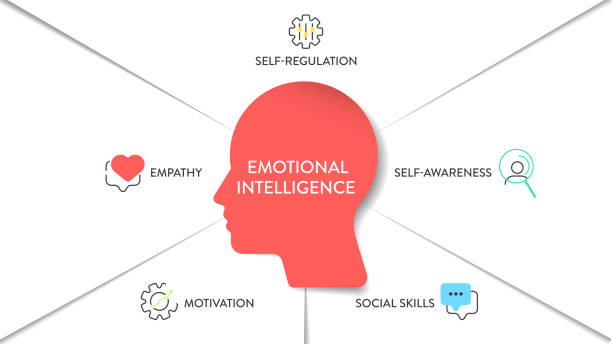
Keywords: empathy, emotion regulation, collaboration
In today’s collaboration-heavy, fast-paced work environments, emotional intelligence (EQ) is often more critical than IQ.
EQ isn’t just about being “nice” or “sociable”—it’s about understanding emotions, navigating tension, and building trust. High-EQ individuals empathize deeply, pick up on non-verbal cues, de-escalate conflicts quickly, and forge lasting partnerships.
Research from Google’s Project Aristotle shows that the top predictor of a successful team isn’t collective IQ, but whether members feel psychologically safe—a product of emotionally intelligent communication.
Even Lady Gaga’s Born This Way Foundation collaborated with Yale University to promote “emotion education” for children, showing how EQ is becoming foundational for the future.
Suggested actions:
- Read books like Nonviolent Communication or The Language of Emotions to sharpen emotional awareness.
- Practice empathy daily: ask “Why might they think that way?” before reacting.
- In team settings, become the “connector” who fosters trust and smooth dialogue.
Skill #3: Strategic Self-Marketing — Be Seen, Be Trusted, Be Chosen
Keywords: influence, personal brand, credibility
In today’s world, having skills isn’t enough—you need to ensure others see your value.
Strategic self-marketing is the first step to owning your career trajectory. Whether you’re changing fields, seeking promotions, or building partnerships, it’s crucial to clearly and authentically express your value.
This isn’t just about having a slick LinkedIn page. It’s about shaping how people perceive your expertise, your unique voice, and your trustworthiness.
Self-marketing is not bragging—it’s sharing real value, telling your story, and nurturing a network of trust. Those who master this unlock more opportunities—not by waiting, but by creating them.
Suggested actions:
- Define your “brand trio”: What problem do you solve? What’s your style? What do you stand for?
- Build a content library: blogs, videos, portfolios, newsletters.
- Regularly “show up”: attend events, share insights, ask smart questions—get noticed in your field.
Skill #4: Cross-Cultural Adaptability — Collaborate Seamlessly Across Borders

Keywords: diversity fluency, cultural empathy, global mindset
In a hyper-connected world, there’s no such thing as a “local market” anymore. Even if you work from home, chances are you’ll interact with international teams or serve clients from vastly different cultures.
True global talent isn’t just fluent in English—it’s someone who can embrace diversity, respect difference, and collaborate effectively across cultural boundaries.
Take Mike Ettling, for example. His exposure to diverse cultures early on shaped his ability to operate globally. His cultural agility made him invaluable in international business settings.
Suggested actions:
- Regularly consume content from different cultures—understand how norms vary around authority, time, communication, and privacy.
- Proactively seek out diverse collaborators to learn through shared projects.
- Learn cultural micro-skills—like business card etiquette, pacing in video calls, or what constitutes “rudeness” in another culture.
Skill #5: Tech Awareness & Hacker Mindset — Stay Ahead of the Curve with Digital Agility
Keywords: digital fluency, tool exploration, lifelong learning
Saying “I don’t get tech” is a professional red flag in the modern era.
You don’t need to become a programmer, but you do need to understand and adopt digital tools, stay informed about industry-relevant technologies, and use tech to amplify your capabilities—not limit them.
A “hacker mindset” means constantly asking: “Can this be done smarter?”, “What tool might automate this?” It’s about curiosity, experimentation, and iteration.
Suggested actions:
- Try one new productivity tool each quarter (e.g., Notion, Trello, Zapier, ChatGPT).
- Subscribe to a tech trends newsletter in your industry.
- Blend tech with business thinking—find intersections that create leverage.
Skill #6: Virtual Collaboration — Thrive in Remote, Asynchronous Work Environments
Keywords: remote leadership, structured communication, digital teamwork
Remote work isn’t a trend—it’s a foundational element of the future workplace. Your ability to collaborate across time zones, manage ambiguity, and keep teams aligned without physical presence is vital.
Virtual collaboration requires more than just Zoom proficiency. It demands written clarity, self-management, and emotional presence despite distance.
High performers in virtual teams structure their thoughts, create visibility, and proactively foster cohesion.
Suggested actions:
- Embrace documentation-first work habits—make your thought process transparent.
- Master digital collaboration tools (e.g., Miro, Slack, Notion).
- Build in casual touchpoints—virtual coffee chats or informal syncs to humanize remote relationships.
Skill #7: Entrepreneurial Drive — Act Like an Owner, Not Just an Employee
Keywords: initiative, resourcefulness, value creation
You don’t need to run a startup to be entrepreneurial. Real entrepreneurial mindset means showing up with ownership, proposing better solutions, and making things happen—even without permission.
In organizations, this shows up as intrapreneurship—employees who think like business owners, evaluate ROI, optimize systems, and energize teams.
These self-starters are among the most coveted talents in any workplace.
Suggested actions:
- For every task, ask: How does this impact the customer? Can this be improved? Who should I involve?
- Make “solve first, report second” your default mode.
- Learn business basics—profit models, product thinking, cost-consciousness.
Final Thought: The Most Valuable Skills Aren’t Just About Knowledge—They’re About How You Think and Act
These future-forward capabilities allow you to evolve, adapt, connect, and create in ways machines and average professionals cannot. They form the mental scaffolding and behavioral muscle that help you thrive, not just survive, in times of uncertainty.
Remember: the future isn’t something you enter—it’s something you actively design. Start building these skill sets now, and you won’t just keep up with the future—you’ll shape it.