
Although the human brain is incredibly smart, it often falls into some ingrained thinking traps. These mental pitfalls cause us to repeat the same patterns of thought and behavior, making it hard to break free and find real solutions. This article will deeply analyze seven common cognitive biases to help you recognize and avoid them, thereby improving your decision-making quality and problem-solving skills.
Thinking Trap #1: Jumping to s — The Rush to Find Answers
Our brains naturally tend to reach conclusions quickly as a built-in protective mechanism. When facing complex or unfamiliar problems, we instinctively skip deep understanding and rush straight to solutions. This rapid response is part of what psychologist Daniel Kahneman calls the “fast thinking” system. Fast thinking is an unconscious, quick, and intuitive mode of thought that helps us react swiftly in daily life, like catching a ball or making simple decisions.
However, for new or complex issues, fast thinking often falls short because it ignores careful analysis of the problem’s essence. The opposite is “slow thinking,” a deliberate, effortful, and rational process suited for complicated and unfamiliar situations. Kahneman warns that many mistakes arise from overreliance on fast thinking — especially “jumping to conclusions,” where we leap too early without enough information.
How to overcome it?
The best method is to conduct a “frame storm” — spend time clearly defining the problem’s scope and boundaries instead of rushing to answers. Like completing the edges of a jigsaw puzzle first, framing the problem carefully sets you up for success. The core of frame storming is asking many “why,” “what if,” and “how” questions to clarify the boundaries and engage slow thinking deeply, thus preventing premature conclusions.
Thinking Trap #2: Mental Looping — Getting Stuck in Your Own Constructed Cycle

Psychologist Achilles proposed the “ladder of inference” model, which describes how we move from observing facts to adding assumptions and inferences, building beliefs that ultimately drive our actions. The problem is this process self-reinforces, causing our thinking to become increasingly abstract and disconnected from reality, forming cognitive biases. This “mental looping” traps us in repetitive, ineffective thought patterns, making it hard to break free and leading to poor judgments.
How to break free?
Try reverse thinking.
Consciously challenge your existing assumptions and mental frameworks by examining the problem from the opposite perspective. For example, list all the core aspects of the problem, then invert each one and observe what new insights emerge. This not only expands your mental horizons but also sparks new neural connections, helping your brain jump out of old patterns and explore more possibilities.
Thinking Trap #3: Overthinking — Making Problems More Complex Than They Are
While jumping to conclusions is about rushing, overthinking is the opposite extreme, where endless analysis and worry create problems that don’t actually exist. Overthinking often leads to “analysis paralysis,” where too many details and hypothetical scenarios make the problem seem overwhelming.
Human nature drives us to seek certainty, and this craving intensifies the tendency to overthink. Educational systems’ emphasis on certainty and reliability further reinforces this mindset.
Effective solution: Prototype testing.
This means quickly building a preliminary model of the solution and testing hypotheses through practical trials, rather than endlessly running scenarios in your head. In other words, “act first, then refine.” Use the least costly trial-and-error process and adjust your approach based on feedback. This encourages action and learning, helping us escape the trap of overthinking and restore our natural curiosity for exploration.
Thinking Trap #4: Settling for the Minimum — Lack of Drive for Excellence
Sometimes, when facing complex challenges, people settle for “good enough” minimum standards and lack motivation to optimize or break through further. This mindset, triggered at the wrong time, often causes us to stop deep thinking and continuous improvement, missing out on opportunities to create maximum value.
Philosopher Epictetus once advised to carefully examine the full context and long-term impact before acting, avoiding “just do it because it feels good” kind of thinking.
Solution: Integrative thinking.
Integrative thinking means combining the strengths of multiple options instead of falling into an either-or dilemma. For example, a company balancing environmental protection and cost control pressures suppliers while maintaining competitiveness — this is a typical “double down” strategy. Or breaking a complex problem into parts, applying different strategies to each, and synthesizing the best overall solution.
Thinking Trap #5: Information Overload — Drowning in Data and Struggling to Decide
In today’s world, we face an explosion of information daily, but quantity doesn’t equal quality. Information overload scatters attention, causes decision fatigue, and even anxiety, making it hard to discern what truly matters.
How to cope:
Learn to filter and focus.
Distinguish core information from noise, set reasonable limits on when and how you consume information, and avoid endless scrolling. Adopt “information decluttering,” regularly clearing out useless data to free your brain for deep thinking.
Thinking Trap #6: Emotional Hijacking — Losing Rational Judgment to Strong Emotions
When emotions run high, we struggle to stay calm and often make impulsive or extreme decisions. Emotional hijacking unbalances thinking, causes cognitive bias, and blocks reasonable problem-solving.
How to fix it:
Practice mindfulness and emotional regulation.
Through mindfulness meditation and emotional awareness techniques, build the ability to notice and manage your feelings, preventing negative emotions from dominating your decisions. Learn to pause during emotional surges and give yourself time to think clearly.
Thinking Trap #7: Fixed Mindset — Resisting Change and Clinging to Old Views
Some people get stuck in a fixed mindset, resisting new ideas and changes, clinging stubbornly to established beliefs and refusing to try new methods. This “mental rigidity” limits innovation and growth.
Solution: Cultivate a growth mindset.
Embrace challenges, accept failure, and see problems as opportunities to learn and improve. Continuously update your knowledge, keep an open mind, and actively seek feedback and diverse perspectives.
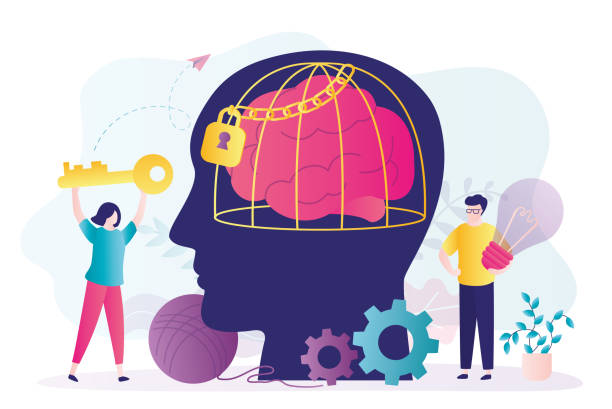
Thinking traps are invisible stumbling blocks that hinder us from more efficient and wiser thinking and decision-making. By recognizing and avoiding these seven common pitfalls, and cultivating methods like frame storming, reverse thinking, prototype testing, and integrative thinking, you can significantly enhance cognitive flexibility and problem-solving ability. Remember: the quality of your thinking determines the quality of your actions — freeing yourself from mental shackles is the first step toward unlocking success!