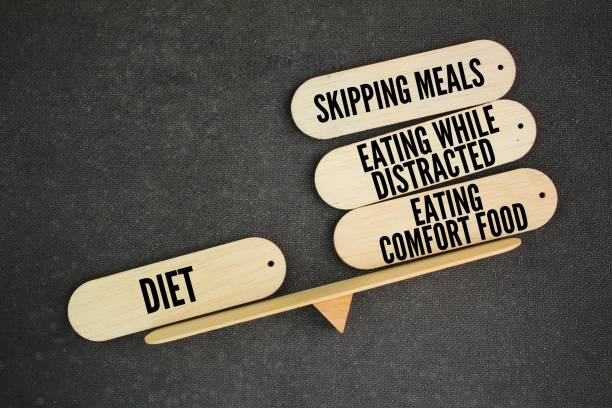
Healthy eating has always been a topic of great public concern. However, many widely accepted “common sense” beliefs about diet are not actually truths and may even mislead us. Scientific research continuously reveals that many popular dietary notions do not suit everyone and can sometimes have the opposite effect. Today, we will take a deep dive into several common misconceptions in the field of nutrition to help you understand diet and health more scientifically.
1. There Is No One-Size-Fits-All Diet — What Works for Others May Not Work for You
Christopher Gardner, a nutrition expert at Stanford University, led the DIETFITS randomized clinical trial in 2018, which brought important insights. This year-long study involved 609 overweight or obese adults who were randomly assigned to either a low-fat or low-carbohydrate diet group. The results showed that the average weight loss in both groups was roughly the same — about 6 kilograms. However, looking closely at the data reveals huge individual differences: some participants lost more than 27 kilograms, while others actually gained up to 9 kilograms.
This tells us that even scientifically designed “healthy” diet plans cannot guarantee ideal results for everyone. Individual factors like genetics, metabolism, lifestyle habits, and even psychological state greatly affect how our bodies process food and how our weight changes. Popular “one-size-fits-all” diets and standardized health advice found online do not apply to everyone and following them blindly may lead you astray.
Modern science also shows that people’s responses to foods are highly personalized. Even genetic testing can only partially predict how a person’s metabolism will react to specific diets. The most important thing is to learn to listen to your own body and, combined with professional guidance, find the diet that suits you best.
Of course, some basic dietary principles are universally beneficial: increasing dietary fiber, eating more fresh fruits and vegetables, and reducing added sugars and highly processed foods are all good habits for maintaining health. But we should avoid falling into “one-size-fits-all” diet myths and instead rationally evaluate the pros and cons of various diets.
2. Breakfast May Not Be the Most Important Meal of the Day
For many years, we have been told to “eat a good breakfast,” believing it to be crucial for health. However, a 2019 systematic review published in the British Medical Journal overturned this notion. The review analyzed 52 studies on whether eating breakfast affects health, carefully selecting 11 high-quality randomized trials mainly from the US, UK, and Japan, with experimental periods ranging from one day to six weeks.
The findings showed no solid evidence that skipping breakfast causes weight gain or lowers basal metabolic rate. In fact, some studies indicated that people who skip breakfast may lose weight more easily. This contradicts traditional nutritional views, and the reason lies in updated understanding of eating patterns and energy metabolism.
Modern nutrition advocates “smaller, more frequent meals” and “chewing slowly,” avoiding overeating in one sitting to reduce sharp insulin spikes. Chronic excessive insulin stimulation can lead to insulin resistance and increase diabetes risk. The concept of intermittent fasting has become popular as extending fasting periods (such as skipping breakfast and fasting 12-14 hours overnight) helps lower insulin levels and improves metabolic health.
The breakfast industry is worth billions, and huge commercial interests have promoted the idea that breakfast is a must. As consumers, we should critically evaluate such commercial messaging and pay attention to how our own bodies actually respond. Some people feel more energetic and better control their weight by skipping breakfast, while others need breakfast to maintain stable blood sugar and energy levels. The key is individualization — try different approaches and find the daily rhythm that works best for you.
3. The Limitations and Misconceptions of Counting Calories
Many people focus on daily calorie intake when trying to lose weight, hoping to control body weight through the “calorie balance” theory. The World Health Organization provides average standards of about 2,500 calories per day for adult men and 2,000 for women. However, reality is far more complex than these numbers.
While we can roughly measure the energy content of food, accurately estimating the body’s actual energy expenditure is extremely difficult. Basal metabolic rate varies between individuals, influenced by muscle mass, body type, genetics, gut microbiota, and other factors, with differences exceeding 25%. Non-exercise activity thermogenesis (such as unconscious small movements) can also cause more than 10% variation.
More complicated is that calorie values on food labels are often overestimated. For example, walnut calorie counts may be overestimated by 20%, and almonds by over 30%. Cooking methods affect energy release as well; raw and cooked foods have different calorie utilization, and the combination of foods can change absorption efficiency.
Highly processed modern foods disrupt natural cellular structures, making them easier to digest and absorb quickly, which leads to excessive calorie intake without us realizing it. Meanwhile, despite the flood of processed foods, total calorie intake hasn’t increased significantly, implying metabolism and energy expenditure are also changing.
Additionally, the unique gut microbiota plays a crucial role in digesting and metabolizing food; different bacterial compositions affect nutrient utilization efficiency. Therefore, simply counting calories to precisely control diet is unrealistic and lacks scientific basis.
In summary, calorie counting is convenient but not a scientifically accurate tool for weight loss or health management. More important is to focus on overall diet quality, lifestyle habits, and bodily responses.
4. Supplements Aren’t as Magical as You Think
We live in an era flooded with supplements. Vitamins D, calcium, iron, folic acid, and various nutrients are often added to milk, breakfast cereals, and bread, seemingly making these foods more “nutritious.”
However, extensive research shows that for healthy people, a balanced and diverse diet already meets 99% of vitamin and mineral needs. A colorful variety of fruits, vegetables, moderate fish, dairy products, plus adequate sunlight exposure, are the best natural nutrient sources. Moreover, our gut bacteria can synthesize some vitamins like B-complex and vitamin K.
Unfortunately, most people do not meet daily recommended fruit and vegetable intake. Over 90% of Americans fall short, and intake in the UK has remained nearly unchanged over the past decade. Supplements are often treated as “quick fixes,” but numerous clinical studies repeatedly confirm that single-vitamin supplements cannot replicate the health benefits of whole foods and may even pose health risks.
For example, excessive vitamin D supplementation has been linked to increased fracture risk; calcium supplements may increase cardiovascular disease risk due to excess calcium ions clogging arteries. Supplements, as chemical additives, are not processed by the body like natural foods, and some nutrients can be harmful if accumulated excessively.
Therefore, unless diagnosed with specific deficiencies by a doctor, ordinary healthy individuals do not need to rely on supplements. A healthy lifestyle and dietary pattern are fundamental to maintaining nutritional balance.
5. Sugar-Free Foods and Drinks Are Not Necessarily Safe Weight Loss Tools
In response to excessive sugar intake and its health threats, many people turn to sugar-free or artificially sweetened foods and beverages, such as aspartame-containing diet drinks. They appear to be zero-calorie and ideal for weight loss.
However, a comprehensive 2019 review analyzed 56 related studies, including 17 randomized controlled trials, revealing a worrying truth: artificial sweeteners do not necessarily bring health benefits and may actually contribute to weight gain, insulin resistance, and metabolic disturbances.
Artificial sweeteners in diet drinks may disrupt the body’s natural perception of sweetness, prompting increased calorie consumption. They can also negatively affect gut microbiota, disturbing digestive and metabolic balance. Many studies associate long-term artificial sweetener intake with higher risks of diabetes and cardiovascular disease.
Worse still, diet drink advertisements often imply they are healthier than sugary drinks, but many contain acidic ingredients that can erode tooth enamel over time.
In conclusion, “sugar-free” does not equal healthy, so choose carefully. Minimizing processed drink consumption and preferring purified water, teas, and fresh fruit and vegetable juices is a more scientific approach.
: The Core of Healthy Eating Is Science, Rationality, and Individualization
In today’s flood of dietary information, it is hard to discern truth from falsehood. We must break old biases, seriously understand the complexity and individual differences behind scientific research, and avoid being fooled by “quick-fix diets,” “miracle supplements,” or “magic foods.”
Healthy eating is not about a single meal, a particular food, or a supplement. It is a comprehensive reflection of dietary diversity, nutritional balance, and a healthy lifestyle. Respect your body’s needs, focus on food quality and overall habits, and combine this with scientific guidance — this is the only path to health.