
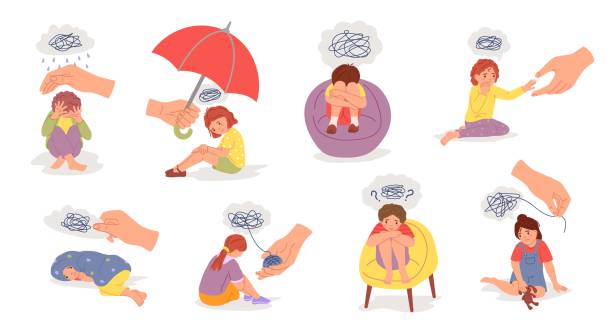
When a teenager utters the words “Life is meaningless,” it often sends a chill down a parent’s spine. Many parents instinctively deny this feeling or respond anxiously, perhaps saying something like, “The hardship you endure now will turn into sweetness in the future.” But we must acknowledge that a child’s confusion and sense of loss don’t arise from nowhere. These emotions are often real reactions to academic pressure, fast-paced living, and the growing pains of adolescence.
As parents, we must strive to see the world through our children’s eyes—understanding the roots of their emotional distress and offering support, companionship, and thoughtful guidance. Helping them move beyond the feeling that “life is meaningless” and reestablish a sense of joy and purpose is an essential mission of modern parenting.
I. Why Do Children Feel That “Life Is Meaningless”?

To adults, it might seem premature for children to ponder life’s meaning. But if we reflect on our own childhood, we’ll remember that the lack of control, hope, and a sense of value can make anyone—no matter how young—feel adrift and disoriented.
1. Academic Pressure Crushes the Vitality Childhood Should Bring
In primary school, many children still enjoy watching cartoons, playing games, or running outdoors. Extracurricular classes are often interest-based rather than solely aimed at academic advancement. But by middle school, things change rapidly.
Subjects become harder, exams more frequent, and competition more intense. Elite schools often demand routines like waking at 6 a.m. and sleeping at 11 p.m. Life becomes a nonstop race to study, while leisure becomes a rare luxury.
Even when children work hard, they may not see results. One slip in grades brings criticism; even excellent performance is met with only a fleeting praise before the next wave of expectations hits. Without time to breathe or reflect, it’s natural for children to ask: What is all this even for?
2. A Lack of Autonomy and Control
Many children feel that their lives are arranged entirely by adults—what to study today, where to go tomorrow, which weekend class to attend. Their time, choices, and interests are often sacrificed under the banner of “this is for your future.”
When parents casually mention things like “I spend so much money on your tutoring” or “we bought a house in this school district for you,” children may start to feel like a burden—someone who must constantly prove their worth through grades. They struggle to reconcile the idea of “working for the future” with the loss of joy in the present.
II. What Children Need Is Not Preaching, but Real-Life Experiences
1. Expand Their World—Let Them Truly Feel the Richness and Joy of Life
One father shared that because of work, he frequently traveled and would bring back small souvenirs for his child, along with stories about people and places he encountered. Eventually, he and his wife started taking their child on trips together. Whether to ancient towns in China or small cities abroad, the child became immersed in different cultures, languages, and customs. His worldview broadened significantly.
On one trip to Japan, the child nervously tried to order food in English. After succeeding, the joy he felt sparked a deep, genuine interest in learning the language. From that point on, he no longer studied English passively—he wanted to use it.
This is how meaning is born: when a child personally experiences the value of knowledge and forms an emotional connection with it, their internal motivation naturally awakens.
2. Use Everyday Moments to Awaken a Child’s Curiosity About the World
Learning shouldn’t be isolated from life. Wise parents turn daily life into a series of interesting, spontaneous “classrooms”:
- While eating out, discuss how the restaurant is run, the design of the menu, and pricing strategy;
- On outings, explore ticket pricing, guide services, and cultural branding;
- While gaming, ask about level design, character development, user experience, or even monetization models.
This type of subtle, everyday guidance not only makes children more curious about life but also enhances their thinking, communication, and observation skills.
III. The Best Way to Support Children Is to Replace Pressure with Exploration
1. Don’t Suppress Their Interest in Games—Guide It Meaningfully
Many parents treat video games as a “plague” and try to ban them entirely. But blocking isn’t as effective as channeling. In moderation, games can foster creativity, strategic thinking, quick reflexes, and teamwork.
One parent shared: “We have a PS5, a Switch, and a high-end PC at home. The only rule is: finish your homework first. On top of that, we play games together—like Zelda, Minecraft, and Civilization. We discuss game mechanics, world-building, and storytelling. The more we explore, the more discerning my child becomes. Eventually, they lost interest in shallow mobile games.”
2. Encourage Reading—Let Children Experience Life Through Others
Reading is one of the most direct ways to explore the world. Unlike passive learning, literature, biographies, and science stories allow children to feel the world through others’ eyes. As they ponder the characters’ choices and fates, they begin to ask: “What would I do?” or “Can I relate to this?”
This kind of introspection is crucial to personality development—and to rebuilding a sense of life’s value.
IV. Parents Are Children’s Most Direct Role Models
We often think raising kids means telling them what to do. But more important is how we live.
Children are watching:
- Do we still read, learn, travel, or exercise after work?
- When facing setbacks, do we complain or seek solutions?
- Do we still dream? Do small things still move us?
If a parent lives with passion, keeps learning, and embraces growth, the child will naturally believe life is worth living. They’ll see that life is more than just assignments—it’s filled with infinite possibility.
But if a parent constantly says, “That’s just how life is,” or “I can’t even figure life out—how can I teach you?”—how can a child believe that life has meaning?
V. Instead of Preaching About Meaning, Create It Together
Many parents try to convince their children that “hard work now means a better life later.” But they often forget that children perceive time differently. For a 14-year-old, “later” feels vague and unreachable.
So why not bring meaning into the present?
- Work on a family project—planting a garden, making a short film, or designing a homemade product;
- Encourage your child to start a blog or Bilibili channel, where they can share learning experiences or personal interests;
- Support volunteer work or community service, so they can feel the joy of helping others;
- Help them set personal goals—like giving a talk about space, drawing a world map from memory, or writing a novel.
These small but concrete actions help children rediscover the joy of being self-driven.
: Helping Children Isn’t About Erasing Emotions—It’s About Rebuilding Hope
When a child says, “Life is meaningless,” they’re not making excuses—they’re calling for help. Instead of denying or dismissing them, respond with warmth:
“I understand how you feel. Maybe we can search for your meaning together.”
Ultimately, they must walk their own path—but with the support and understanding of their parents, they’ll walk with greater strength and resilience.
If you’re willing to believe that your child isn’t lazy or careless—but simply doesn’t know why they should work hard—then you’ve already taken the most important first step.
The next step is helping them find that “why” through real-life experiences and meaningful exploration.