
With the arrival of the digital age, the internet and various social media platforms have deeply integrated into our lives, becoming the main channels for daily communication, self-expression, and information acquisition. However, the internet is more than just a tool; it profoundly influences and even shapes our behavior patterns and emotional experiences. The social and psychological changes brought about by online culture are quietly reshaping human cognition, values, and social behaviors.
Online Culture and the Shift in Modern Social Values
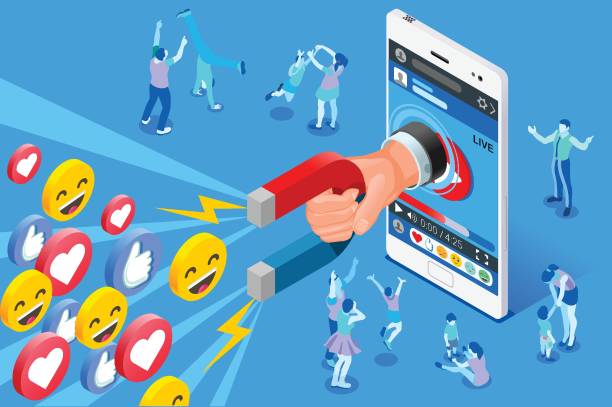
The internet has made “fame and fortune” and “self-presentation” goals that many chase, creating a culture that idolizes fame, high-profile self-promotion, and external appearances. The countless “likes,” “followers,” and “shares” online have become a new form of “currency,” with people eager to prove their self-worth through these quantifiable metrics. Every status update or photo posted on social media seems to engage in endless comparison and competition.
This culture has bred a “labeling” social environment where people are often defined by a single number or rating, sometimes unconsciously accepting this evaluative system. In reality, this path is dangerous, as it drastically simplifies individual complexity, ignoring human diversity and rich inner substance, replacing it with a society judged by digital “scores.”

The Proliferation of Rating Systems and Cognitive Biases
In real life, we tend to trust evaluations from familiar friends or experts, but nowadays, people increasingly trust ratings and reviews from complete strangers online — a risk not to be underestimated. Online ratings are often based on partial information, prone to overgeneralization and even distortion of facts. More worryingly, these scores are treated as the sole measure of a person’s overall worth, as if a “total score” can represent one’s entire personality and capability.
Broader rating systems have penetrated every corner of life: from product reviews on e-commerce sites, to checking social media accounts during job recruitment, to credit scoring systems and online student evaluations. Evaluation standards are ubiquitous and highly personalized. People are surrounded by an invisible, continuous digital “judgment” — often without even realizing it.
Digital Footprints and Loss of Privacy
Modern data collection technology tracks every “digital footprint” users leave on the internet to build detailed personal profiles, often without users’ explicit knowledge or consent. Our browsing habits, click preferences, interaction frequency, and even emotional expressions become data points collected and analyzed.
However, the digital world currently lacks effective regulation, with nearly no protection against internet addiction or safeguarding user autonomy. Users are entrusted with the responsibility of “self-management,” but in reality, platforms undermine true freedom of choice through carefully crafted “behavioral guidance.” Many online products use complex algorithms and interface designs to encourage prolonged engagement, frequent interactions, and even dependency.
“Behavior Design”: The Power Behind the Scenes
“Behavior design” is an emerging discipline that applies economics and psychology principles to design products and services that make users act according to the designers’ intentions. It not only dictates our clicking paths within apps but also influences whether we purchase an item, keep following an account, or even who we socialize with.
At its core is the “framing effect”: how information is presented dramatically affects our decisions. For example, the layout of a sales page or the design of buttons subtly steers us toward decisions we might not otherwise make. Tech companies optimize these “environmental cues” to maximize profits, while users are often unknowingly manipulated.
Virtual Rewards and the Brain’s Dual Reality
The digital world creates an unprecedented form of stimulation through “virtual rewards.” Unlike real-life pleasure and satisfaction, virtual rewards are immediate and frequent, such as the brief excitement from likes, the sense of achievement in games, or the satisfaction of online shopping. This reward system deeply activates the brain’s reward circuits, fostering strong dependence on online interactions.
Humans now live beyond “physical reality,” inhabiting an increasingly dominant “virtual reality” where we spend significant time experiencing “virtual” emotions and relationships — redefining the authenticity and value of these experiences.
Emotional Dependence and the Secret to Digital Success
Though virtual rewards are unreal stimuli, their appeal far surpasses past experiences. The success of digital technology lies not only in convenience but also in fulfilling users’ psychological needs for attention, self-affirmation, security, and excitement. Under the pressures of modern society, many view apps as primary sources of happiness and psychological comfort.
This emotional dependence strengthens online attraction, causing users to fall into the “like trap,” measuring self-worth by numbers of likes and comments, neglecting genuine inner feelings.
Social Comparison and Cognitive Shifts in the Digital Age
The internet intensifies people’s tendency for social comparison. Previously, measures of social status and personal charm were diverse and complex; now “likes” serve as quick, quantifiable proxies. Attention shifts from important, long-term goals to immediate, superficial emotional value, altering cognitive structures.
Amid social media “noise,” only content that rapidly captures attention survives, creating a “survival of the fittest” competition that forces many users to conform and sacrifice authenticity.
Mobile Devices and Subtle Changes in Relationships
The ubiquity of smartphones has changed how people communicate but also introduced cracks in intimate relationships. The phone itself is a distraction that can interrupt face-to-face conversations anytime, reducing the depth and quality of communication.
Research shows phones redefine boundaries of intimacy, making it hard to focus on genuine companionship. Overreliance on external stimuli also diminishes creativity and the ability to be alone.
Skinner’s Behavioral Theory and the Metaphor of the Online “Box”
Behaviorist master B.F. Skinner pointed out that behavior is controlled by environmental stimuli and that changing the environment changes behavior. This principle is widely applied in the digital realm. Online products shape user behavior through positive rewards and negative punishments.
Modern “behavior design” extends Skinner’s theory by using economic and psychological models to carefully craft “reward structures” that induce sustained interaction and guide users to platform-beneficial choices.
Behavioral Economics and “Nudge” Strategies
Daniel Kahneman and Amos Tversky revealed that human decision-making is not fully rational but subject to systematic biases, making traditional economic models inaccurate in predicting behavior.
Building on this, Richard Thaler proposed the concept of “nudging” — subtly changing how choices are presented to guide people toward better decisions without coercion. This theory has been widely applied in public policy and digital product design to improve user experience and business outcomes.
Psychological Manipulation and Risks in the Online World
Online inducements and design strategies precisely analyze user psychology, leveraging digital footprints and big data to push content and ads that trigger the strongest user reactions. Many commercial operations exploit users’ limited cognition and emotional vulnerabilities.
This manipulation leads not only to impulse buying but also addiction and financial losses, becoming a hidden yet powerful risk in the digital era.
: Technology is a Tool — How Should Users Respond?
Technology itself is neutral but grants designers immense power to influence user behavior. Ordinary people often feel helpless and easily manipulated when facing meticulously designed digital environments.
To stay clear-headed in the digital age, users need to increase awareness of “behavior design” and “nudge” tactics, enhance digital literacy, and strengthen self-control. Meanwhile, society and regulators should promote better rules to protect user rights, ensuring technology serves human well-being rather than becoming a tool for manipulation.