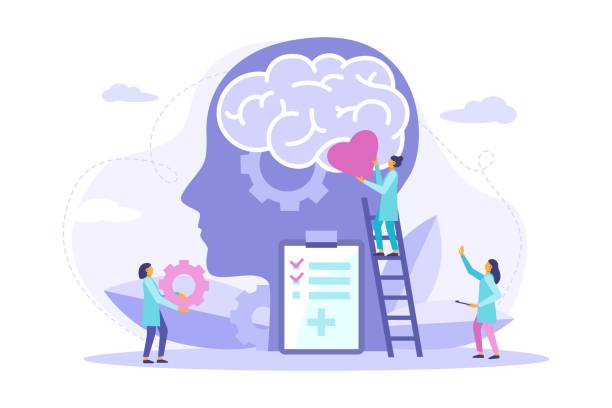
Do you long for a brain that is not only strong and resilient, but also filled with hope and optimism? The answer is simpler than you might think: consistently immerse your brain in positive experiences. These can be as simple as a warm hug, a delicious meal, a moment of deep reflection, or the joy brought by a beautiful piece of music. When you consciously feel, notice, and internalize these uplifting moments, your brain gradually begins to change in a lasting and positive way—becoming stronger, more peaceful, and more positive.
1. Inner Strength Is Something You Can Build
Inner strength isn’t something we’re born with—it’s something we develop over time through life experiences. This includes:
- The ability to adapt to stress
- Resilience in the face of setbacks
- Confidence and determination to act
- Clarity and insight to see things as they are
- A sense of satisfaction with the present
- The warmth and love we extend to others
These qualities are not abstract ideals. They can be cultivated through intentional practice and accumulated experience. Neuroscience shows that our brains are highly adaptable—what researchers call “experience-dependent neuroplasticity.” In other words, every thought, feeling, and action leaves an imprint on the brain.
2. Why Do Negative Experiences Stick So Easily?
The human brain evolved for survival. In ancient environments, our ancestors had to be constantly alert to threats like predators, storms, and scarcity. As a result, the brain developed a “negativity bias”—a built-in tendency to be more sensitive to threats, pain, and losses. The logic was: missing a reward might be inconvenient, but missing a danger could be fatal.
While this helped our ancestors survive, it causes problems in modern life. Our brains still over-focus on the bad and barely register the good. For example, one critical comment often affects us more deeply than ten compliments.
As psychologists say: the brain clings to negative information like Velcro but lets positive experiences slide off like Teflon.
3. Escaping the “Red Zone”: Creating a “Green Brain”

The human brain evolved in three main stages:
- Reptilian brain (brainstem) – governs survival instincts
- Mammalian brain (limbic system) – handles emotions and social bonding
- Primate brain (neocortex) – enables language, thinking, and creativity
These layers correspond to three core psychological needs:
- Safety (avoiding harm)
- Satisfaction (seeking rewards)
- Connection (building relationships)
When these needs are met, the brain enters a “green zone”—a state of calm, openness, love, and fulfillment. But when these needs are frustrated or threatened, the brain flips into a “red zone”—marked by fight, flight, or freeze responses, with anxiety, anger, sadness, or irritability.
In today’s fast-paced world, many people are stuck in the red zone—overwhelmed, tense, and exhausted. The key to change lies in intentionally and repeatedly activating positive experiences to expand your brain’s green zone.
4. The Four-Step HEAL Process for Internalizing Positivity
Renowned neuropsychologist Rick Hanson introduced a practical method to help us transform fleeting positive moments into lasting “neural wealth.” His HEAL model consists of four steps:
H (Have) — Have a positive experience
Notice or create a positive experience. This could be as simple as feeling the sun through your window or recalling a moment when you felt proud or appreciated.
E (Enrich) — Enrich the experience
Stay with the experience. Deepen it by engaging your senses—notice how it feels, sounds, looks. The richer the experience, the more your brain can encode it.
A (Absorb) — Absorb it into your being
Let the good feeling really sink in. Imagine it soaking into your body and mind. The deeper your emotional involvement, the stronger the neural imprint.
L (Link) — (Optional) Link positive to negative
If you feel ready, gently connect the positive experience with a past negative one. Over time, the positive can begin to neutralize or heal the emotional charge of the negative.
5. Daily Practices: Plant Flowers Anytime, Anywhere
You don’t need rituals or special settings to internalize positive experiences. Any moment can become a training opportunity:
- While eating: Savor the aroma, taste, and color of your food. Feel gratitude for its nourishment.
- While showering: Feel the warmth of the water, and let it relax every tense part of your body.
- During work breaks: Recall small wins and let yourself feel the sense of accomplishment.
- While walking: Notice flowers, birds, sunlight, and shadows—let nature soothe you.
Even just 30 seconds of immersion in a positive moment, repeated several times a day, can help your brain gradually shift into a more positive mode.
6. How to Create Positive Experiences in Tough Times
Sometimes, life is hard, and joy feels far away. In these moments, we need to actively create and internalize even small uplifting experiences:
- Recall a moment of pride or joy from the past
- Visualize a hopeful future
- Write down three things you’re grateful for today
- Offer kindness or support to someone else
- Practice self-compassion and self-soothing
You’re not faking happiness. You’re training your brain to see possibilities, to rise above the tunnel vision of helplessness, and to activate your natural resilience.

7. The Long-Term Benefits of Practicing Positivity
Studies in positive psychology and neuroscience show that consistently internalizing positive experiences can lead to major long-term benefits:
- Stronger immune function and better physical health
- Improved stress responses and better sleep
- Healthier, more connected relationships
- Better emotional regulation and psychological resilience
- Increased productivity and progress toward goals
- A more stable and enduring sense of well-being
You don’t need to become perfect overnight. Just spend a little more time each day with what is warm, kind, encouraging, and true—and slowly but surely, your brain will rewire itself toward a brighter, stronger version of you.
Final Thoughts: Let Your Brain Become a Container for Happiness
True happiness doesn’t come from how rich or exciting your life looks on the outside, but from how well your brain is able to hold onto the good.
Life will not necessarily get easier—but you can become stronger. Real resilience isn’t about never falling. It’s about falling and remembering—again and again—the warmth that still lives inside you.
So from today, begin to fill your mind with light. Let every tiny good moment become a brick in the house of your well-being.
Your brain deserves to be gently, beautifully rewired.