
In today’s information-overloaded world with abundant choices, many people experience an invisible psychological pressure—the fear of missing out on certain opportunities and worrying that the choices they make are not optimal. These are the two psychological phenomena we will discuss today: Fear of Missing Out (FOMO) and Choice Anxiety. These states not only affect our emotions but also make decision-making difficult, often causing hesitation and procrastination.
1. What Is Fear of Missing Out? Why Do We Feel Anxious?
When you scroll through Douyin, Weibo, or public accounts, you often see others living more exciting or successful lives. Their posts are always glamorous: some are traveling, some are thriving in their careers, others have rich social lives. On platforms like Xiaohongshu, Instagram, or Facebook, almost everyone showcases their best moments. This visual stimulation creates a psychological gap in many people, making them feel they are “falling behind” or missing important opportunities. This feeling is called Fear of Missing Out (FOMO).
The reason you fall into this trap is simple: you spend too much time and energy focusing on “what others have” instead of appreciating and being grateful for what you already own. Meanwhile, the choices we face keep multiplying, whether in shopping, entertainment, or lifestyle. The overwhelming number of options is dazzling, and temptation is everywhere.
Besides FOMO, there’s a similar psychological barrier called Fear of Better Options (FOBO). This anxiety stems from fearing that the decision you make now isn’t the best and that a better option might appear later, causing paralysis in making any choice and resulting in stagnation.

2. Why FOMO Isn’t Your Fault
FOMO has deep physiological, cultural, and technological roots.
1. Physiological Factors: The Innate Drive for Group Belonging
For example, consider the migration of African wildebeests: every year thousands travel long distances in tightly packed herds, relying on collective intelligence to protect themselves from predators. This instinctive “follow the crowd” behavior is part of a survival mechanism that ensures group safety.
Similarly, human FOMO reflects a deep desire for belonging—we fear being excluded, forgotten, or left behind. This is an evolutionarily ingrained psychological mechanism.
2. Cultural Factors: The Amplification Effect of Social Media
The internet and social media place us in a constant environment of comparison. Challenges, events, and trends spread rapidly, creating intense social pressure. Everyone is participating, so if you’re not, you feel left out. This leads people to make impulsive decisions or take part in activities unsuited for them, paying a toll physically and mentally.
3. Technological Factors: Information Overload and Scarcity of Attention
Smartphones and mobile internet have changed our life rhythms. Data show Americans spend over 10 hours daily looking at screens, bombarded by app notifications and messages that prevent genuine calm. Our brains are continuously attacked, focus diminishes, and anxiety rises.
Worse, social media often presents highly polished, filtered versions of life, hiding the real behind the scenes. The result is constant comparison to idealized lives, naturally breeding anxiety and dissatisfaction.
3. How to Cope with FOMO and Choice Anxiety?
Regardless of your age, profession, or life stage, the solution is cultivating decisiveness and actively taking control of your life. Two key principles:
1. Learn to Choose What You Truly Want
Don’t try to exhaust every possible option—it wastes time and energy. Make a decision, close off other channels, and focus forward without constantly looking back. You’ll find that choosing and letting go is the first step toward freedom.
2. Find the Courage Not to Fear Missing Out
If you’re not obsessed with “having it all,” then even without everything, you already have what truly matters. Learning to let go brings liberation and satisfaction, letting you focus your energy on what’s important.
4. Specific Manifestations of FOMO and Coping Strategies
Manifestations of FOMO
- You believe others’ lives are more exciting, an illusion magnified by social media.
- You fear missing key social events or experiences, worried about being isolated.
Marketers and promotions exploit this psychology—“new arrivals,” “limited-time offers”—leveraging herd mentality to drive consumption.
Coping Strategies
- Recognize the essence of FOMO: it’s an emotional reaction, not a rational judgment.
- Reduce social media usage: schedule notifications off time to cut down info bombardment.
- Cultivate gratitude: list three things you’re grateful for daily to build inner contentment.
5. FOMO in Decision-Making: Distinguishing Risk from Action
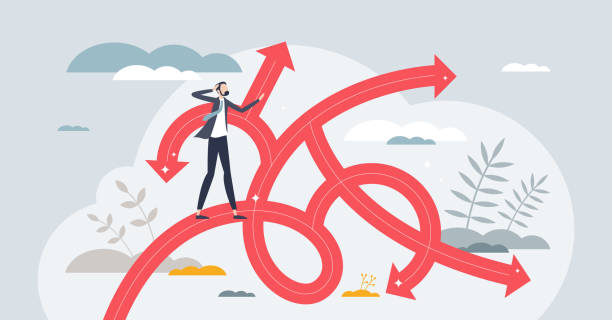
Risks vary with decisions, so strategies differ.
1. High-Risk Decisions
Such as changing jobs, starting a business, or relocating. Set clear criteria, gather sufficient information, rely on facts, and avoid emotional sway. Steps include:
- Define the problem clearly.
- Set standards: feasibility, budget, time, expected return.
- Collect data from multiple sources.
- Document and analyze for a decision memo.
2. Low or No-Risk Decisions
Like what to wear or eat—these have limited impact. Key points:
- Don’t overthink; decide quickly.
- Accept that mistakes are okay.
- Avoid “choice paralysis,” keep moving.
6. How to Cultivate Decisiveness and Achieve Mental Freedom?
Clarify goals and prioritize
Know what matters most; list your goals and focus on what has greatest meaning.
Learn to let go and say no
Life is full of distractions; say “no” to what’s irrelevant to stay focused.
Practice “decide and act” cycles
Stick to your decisions and avoid second-guessing. Action is the best remedy for anxiety and procrastination.
7. : From FOMO to Psychological Freedom
FOMO and choice anxiety are common in modern society but not unsolvable. By understanding your emotional mechanisms, clarifying your true needs, and cultivating decisive action, you can free yourself from anxiety and take charge of your life’s direction. Every firm choice is a commitment to your future. May you no longer be driven by fear but walk a brilliant path shaped by belief and action.