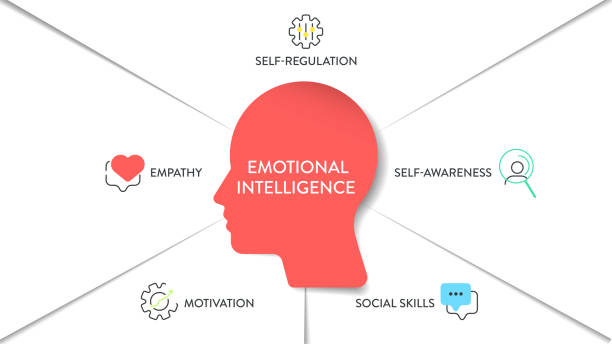
Emotional intelligence, or EQ, is an essential skill in modern life. Whether at work, within family, or among friends, people with high emotional intelligence tend to better understand their own and others’ emotions, manage complex relationships effectively, and achieve greater success and happiness. So, how can one truly improve their emotional intelligence? This article will explore practical methods to enhance EQ from three core aspects: self-control, emotional expression, and interpreting others’ emotions. It will also include useful tips to help you gradually refine yourself.
1. Strengthen Self-Control: The Foundation of Emotion Management
We often simplify “self-control” as merely “controlling emotions,” but in reality, it is much more complex and subtle. True self-control is not about suppressing emotions but about expressing them appropriately—at the right time, to the right people, and in the right way.
The human brain has two parts related to this: the “emotional brain” (limbic system), which triggers immediate emotional reactions; and the “rational brain” (prefrontal cortex), which is responsible for analysis and judgment. External stimuli, others’ words, or even an inadvertent glance first activate the emotional brain before the information is passed to the rational brain for logical processing. Sometimes, this communication “short-circuits,” leading to emotional outbursts or impulsive behavior.
For example, you know eating chocolate will give you a headache, yet you can’t resist opening a box. This is your emotional brain “winning” over the rational brain. To avoid this, we need to learn to “pause” and give the rational brain time to analyze and regulate emotions. Psychologists call this technique the “cortico-thalamic pause,” which helps ease impulsiveness and emotional volatility.
Practical Tips: Daily Exercises to Improve Self-Control
- Adjust Your Posture
Open your chest, pull shoulders back, slightly push out your abdomen, inhale deeply for two seconds, then exhale slowly for two seconds. Repeat several times to relieve tension and anxiety. - Brief Eye Closure
When stressed, close your eyes for 2–3 seconds to temporarily “cut off” visual input and cool down your brain. This simple trick helps soothe emotional triggers from external information. - Relax Facial Muscles by Opening Your Mouth
Occasionally open your mouth for a second or two to relax tight cranial nerves and facial muscles, reducing psychological pressure.
With consistent daily practice of these methods, your emotional responses will stabilize and your relationships will improve. Self-control is not innate but can be developed through training.
2. Learn to Express Your Feelings Honestly and Effectively
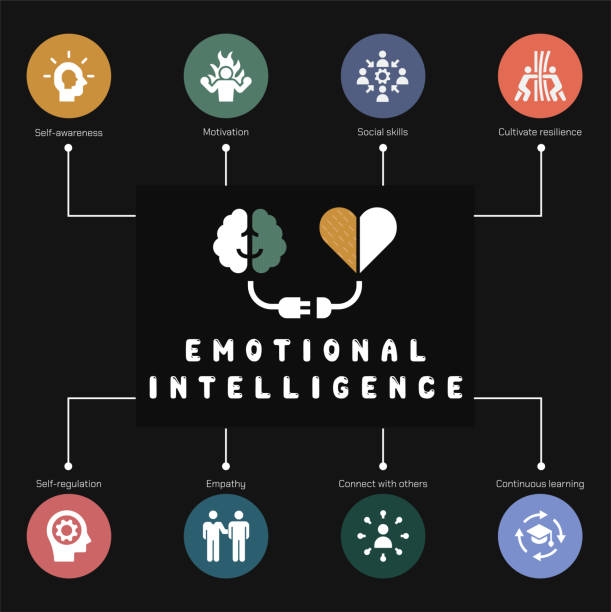
Improved self-control brings inner calm, but emotional management isn’t only about restraint—it also involves expressing feelings properly. Expressing yourself not only helps you understand yourself better but also deepens communication and understanding with others.
Many people lack deep awareness of their own feelings and easily mislabel vague sensations as different emotions. For instance, when you say “I really hate him,” you might actually be recalling past painful experiences that person triggered. Recognizing the true source of your inner emotions is a crucial step in raising your EQ.
How to Express Emotions Effectively? Follow These Basic Principles:
1. Respect Your Own and Others’ Emotional Rights
Everyone has the right to experience various emotions and express them appropriately. At the same time, respect others’ right to express their feelings without criticism or belittlement.
- You have the right to say “No” and refuse things or demands you dislike.
- You have the right not to conform to others’ expectations and to courageously voice your opinions.
- You have the right to make mistakes without harsh self-judgment.
- You have the right to change your mind—growth means change is allowed.
2. Set Healthy Boundaries
Protect your feelings by learning to set boundaries. Don’t keep yourself in uncomfortable environments or relationships for too long.
- Say “No,” “I don’t want to,” or “I disagree” promptly—not to avoid but to protect yourself.
- Reserve personal time and space to maintain your independent rhythm of life.
3. Learn to Listen and Avoid Hurtful Language
When expressing feelings, also learn to listen to others. Avoid phrases that might hurt others like “You’re too sensitive” or “You’re always like this.” Instead, empathize sincerely and provide support.
True listening means being free of judgment and bias, allowing you to genuinely understand others and foster deeper emotional connections.
3. Learn to “Read” Others’ Emotions: Understand Nonverbal Emotional Cues

Communication isn’t just about words—over 70% of it happens through nonverbal emotional expression. Your ability to accurately interpret others’ microexpressions, eye contact, and body language directly impacts the quality of your interpersonal relationships.
Harvard psychologist Robert Rosenthal conducted a famous experiment where participants watched a silent film focusing on a woman’s various emotional expressions. The study found that people with higher emotional intelligence were better at detecting subtle emotional signals and tended to be more successful socially and professionally.
How to Train Your Ability to “Read” Others’ Emotions?
- Silent Observation
When watching TV, movies, or news, try turning off the sound and focus on facial expressions, gestures, and eye movements. You may feel confused at first, but with time, you will become more sensitive to emotional signals. - Pay Attention to Details
Notice subtle facial muscle movements, posture, and changes in tone when people speak—these reveal true feelings. - Ask Open-Ended Questions
During conversations, use questions like “How do you feel?” or “What do you think?” to encourage others to express themselves and improve mutual emotional understanding.
4. Maintain Healthy Interdependence and Avoid Emotional Dependency Traps
Improving emotional intelligence involves personal growth and also how we relate to others, especially in close relationships. Dependence in love, marriage, and family is a double-edged sword—it can be support and strength if handled well or burden and restraint if not.
Key Principles:
- Financial Independence
Mental independence often stems from material independence. Financial autonomy as an adult reduces excessive reliance on others and provides greater security. - Have Personal Space
Living together doesn’t mean giving up yourself. Everyone needs a “territory,” whether physical or psychological. - Maintain Your Social Circle
Don’t cut off friends and family because of a relationship. A healthy social support network is vital for emotional stability. - Insist on Independent Decisions
Life together requires compromise, but personal choices and hobbies remain important. Maintaining selfhood is the foundation of a lasting relationship. - Keep Your Interests and Hobbies
Regardless of your partner’s support, pursue your passions and maintain inner vitality and independence—this reflects emotional health.
Improving emotional intelligence is a gradual process involving self-awareness, emotion management, feeling expression, and understanding others. By strengthening self-control, learning to express effectively, sensitively reading others’ emotions, and building healthy interdependence, you will become a person with higher emotional wisdom. This will enable you not only to tackle life’s challenges but also to build more stable and harmonious relationships, living more confidently and happily.
Raising EQ is a path to inner peace and external harmony—worth every one of us cultivating sincerely.