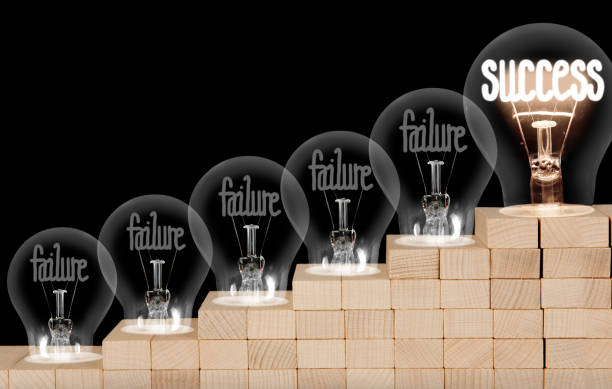
On the path to achieving career and life goals, each misstep can feel like a defeat. Yet real progress comes from fearlessly embracing failure, extracting lessons, and continually adjusting your course—step by step getting closer to “doing things right.” This article explores five dimensions—cultivating a learning mindset, effective experimentation, choosing the right arena, collaborating with high performers, and breaking free from habitual thinking—to show you how to stand firm after a fall and turn every failure into a stepping-stone for success.
1. Cultivate a Growth Mindset: Learning from Failure
- Ask yourself: “What do I want to learn?”
- When exploring multiple career paths, the key question isn’t “Which industry pays most?” but “Which skills do I want to develop? What passions drive me?”
- Example: An engineer fascinated by coding, project management, and product design first takes on a project manager role. Though he stumbles often, refining processes teaches him invaluable team coordination and communication skills.
- Leverage your 20s as a “trial-and-error zone.”
- High tolerance for mistakes: From ages 20 to 30, the cost of failure is relatively low—more time, less financial pressure. Use this window to bravely:
- Switch to emerging industries
- Launch side projects or small teams
- Deep-dive into volunteering or internships
- Warning: The worst failure is inaction—playing it safe, avoiding risk, and stifling your learning.
- High tolerance for mistakes: From ages 20 to 30, the cost of failure is relatively low—more time, less financial pressure. Use this window to bravely:
- Failure as “instant feedback.”
- Every project collapse, product rejection, or botched presentation is a direct lesson in:
- Which assumptions were flawed?
- Which skill gaps need closing?
- Which approaches fail to solve real user pain points?
- This “fail–reflect–retry” cycle is your engine for rapid advancement.
- Every project collapse, product rejection, or botched presentation is a direct lesson in:
2. Experiment Effectively: Reduce Detours by Picking the Right Stage
- Join a “rising star” company.
- Five hallmarks to spot:
- Uniqueness: Combines products/service elements in a way competitors can’t replicate.
- Pain‑point focus: Tackles everyday needs of a broad user base.
- Supporting technology: Owns or builds the platform/infrastructure to sustain its vision.
- Rapid iteration: Leadership listens to feedback and continuously refines.
- Fresh perspective: Approaches market and user needs with novel, often disruptive, viewpoints.
- Illustration: DJI fused advanced image stabilization with consumer‑grade controls; BYD differentiated through battery technology and vehicle design.
- Five hallmarks to spot:
- Don’t treat management consulting as the endgame.
- While consulting hones industry frameworks, data analysis, and client communication, it doesn’t teach you how to build or run a company. Use it as a stepping stone by asking:
- Which hands‑on skills do I want to gain?
- Which industry do I aim to enter next?
- How will I iterate my capability model?
- While consulting hones industry frameworks, data analysis, and client communication, it doesn’t teach you how to build or run a company. Use it as a stepping stone by asking:
- Manage your “failure budget.”
- Early on, embrace risk; after 35–40, with increased financial and family responsibilities, your window for bold experimentation narrows.
- Therefore, cast a wide net and embrace setbacks early to build robust skills and networks for stable growth later.

3. Collaborate with High Performers: Leverage Their Momentum
- Identify your “dream mentors” or “iconic teams.”
- List 5–10 leaders or pioneering teams in your field whom you admire. Reflect:
- How can I contribute to their work?
- Which three core skills can I learn from them?
- Action steps:
- Apply proactively for roles in promising startups
- Engage at industry events and online communities
- Offer constructive insights or help solve key challenges
- List 5–10 leaders or pioneering teams in your field whom you admire. Reflect:
- Balance “giving” and “taking.”
- Don’t just draw on mentors’ resources; add value by:
- Proposing ideas for their projects
- Co-authoring reports or technical papers
- Build trust by proving your reliability and performance under pressure.
- Don’t just draw on mentors’ resources; add value by:
- Use failure as a deep dive.
- Working alongside top performers early means you’ll face high standards.
- Embrace the crucible of failure—project break‑downs and unmet KPIs forge your resilience far beyond any textbook lesson.
4. Break Free from Routine Thinking: Shift from “Looking Down” to “Looking Ahead”
- Map out a 3–6 month growth plan, not just daily tasks.
- Define monthly “key learning & trial objectives”:
- Month 1: Analyze and propose improvements to the product architecture
- Month 2: Lead an A/B test and document insights
- Month 3: Co‑define the next new feature …
- Define monthly “key learning & trial objectives”:
- Cultivate cross‑department empathy.
- Regularly step out of your silo to work with product, ops, customer support, and marketing colleagues.
- When projects veer off track, their early warnings can help you course‑correct swiftly.
- Detect and pivot early.
- If a path hits a dead end, can you pivot quickly?:
- Don’t cling to every preliminary task—be ready to change direction.
- Hold weekly retrospectives to ask: “Which assumption failed? What’s next?”
- If a path hits a dead end, can you pivot quickly?:

5. Fuel Your Progress with Failure
- Sustained passion:
Only by truly loving the trial‑and‑error journey can you keep your momentum high. - Extract lessons from every cycle:
- Document: Keep a daily failure log—“Issue → Cause → Improvement Plan.”
- Share: Discuss openly with mentors and peers to pool collective wisdom.
- Iterate: Deploy new solutions and validate again.
Motivational Quote:
“You don’t have to be born perfect; you just need to be willing to pay the price of mistakes to earn the capital of growth.”
When you embrace “learning by failing” as your most reliable engine, align clear goals, vibrant arenas, inspiring peers, and continuous iteration, you naturally make better decisions and advance steadily toward sustained career and life success.