
Life constantly places us at crossroads—some so subtle they barely register, others so profound they can alter the course of our destiny. Decisions, while seemingly mundane, hold immense power. They not only shape who we become, but also determine the kind of life we lead.
The ability to make wise, strategic choices is not just a matter of talent or luck—it’s a skill, one that can be cultivated. In this article, we’ll explore four pivotal stages in life where major decisions must be made, introduce a decision-making framework that spans 12 essential life domains, and offer practical exercises to help you evaluate and improve your decision-making skills.
Part 1: The Four Critical Life Phases That Shape Your Destiny
Life isn’t one continuous, uniform stream—it’s broken into stages, each with its own turning points. Decisions made during these phases ripple outward, creating long-term consequences.

1. Student Years: When Dreams First Take Root
This is when you begin to shape your values, choose your academic path, form friendships, and develop personal interests. Decisions like which subject to study or who to surround yourself with may seem trivial at the time, but they establish the foundation for your next decade of growth.
2. Early Career: The Social Identity-Defining Phase
Transitioning from student to professional is a leap in identity. Choosing your first job, whether to pursue further education, or start a business—these decisions become the levers for upward mobility or long-term stagnation.
3. Mid-Career: The Tug-of-War Between Passion and Stability
At this stage, you may face increasing responsibilities, pressure to succeed, and doubts about your life’s direction. Every choice becomes a balancing act: chase your dreams or accept reality? Take a leap of faith or settle into comfort?
4. After a Major Crisis: The Life Reset Point
A job loss, health scare, family upheaval, or personal breakdown—these are moments that can either crush you or become the catalyst for a complete reinvention. How you respond in these times—whether you escape or evolve—can determine the next five years of your life.
Part 2: Self-Audit Exercise—How Sound Are Your Decisions?
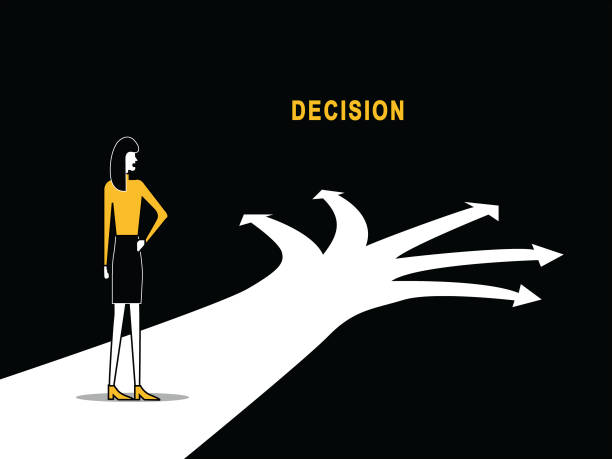
Before improving your decision-making ability, it’s essential to assess your track record. Answer the following 11 yes-or-no questions honestly:
- When financially stable, did I still manage my money rationally instead of spending impulsively?
- Have I ever stayed in a toxic relationship for too long, wasting time and energy?
- Did I miss valuable opportunities to advance or pivot in my education?
- Is my current job misaligned with my inner passions and purpose?
- Have I avoided taking promising risks because I feared failure?
- Has my lifestyle negatively impacted my health or longevity?
- Have I prioritized short-term consumption over long-term financial growth?
- Have I over-invested emotionally in relationships that left me drained?
- Have I ever made decisions that posed serious legal or ethical risks?
- Have any of my choices brought stress or harm to my family?
- Have I passed up on the future I truly wanted due to short-sighted decisions?
Tally your “Yes” answers to assess your decision-making tendencies:
- 0–1 Yes: You’re a rare high-functioning decision-maker—but beware of becoming too cautious or detached.
- 2–3 Yes: Mostly rational and aware, though blind spots may exist in certain areas.
- 4–5 Yes: Accumulated missteps may require mid-course correction.
- 6–7 Yes: Your life may have veered off course. Consider a full reset.
- 8 or more Yes: You’ve made repeated misjudgments—this could be your turning point for transformation.
Part 3: The 12 Life Domains That Define Your Trajectory
There are 12 core areas that determine the overall quality of your life. A misstep in any of these can have outsized consequences. But making wise choices here can serve as a multiplier for your future.
| Life Area | Key Decision Question |
|---|---|
| Education | Does my academic path align with my passions and long-term goals? |
| Romantic Partner | Have I chosen someone truly compatible and growth-oriented? |
| Parenthood | Do I treat having children as a lifestyle decision—not just an age factor? |
| Social Circle | Do my friends push me forward or hold me back? |
| Living Environment | Does my city or neighborhood limit my access to opportunities? |
| Career | Am I in a job with room to grow and long-term value? |
| Debt Management | Is my debt structure helping or hindering my financial freedom? |
| Health | Do my daily habits support long-term physical and mental wellness? |
| Hobbies & Passion | Do I allow space for creativity and personal fulfillment? |
| Curiosity | Do I continuously explore and expand my intellectual horizons? |
| Collaboration | Have I built meaningful partnerships for long-term success? |
| Legal & Ethical Risk | Do I respect boundaries that prevent catastrophic fallout? |
Part 4: Reflective Practice—Map Your Life’s Key Choices
Spend 10 minutes writing down the most important decision you’ve made so far in each of the 12 domains:
- Most pivotal education decision: ________
- Biggest relationship choice: ________
- Parenthood-related decision: ________
- Most impactful social change: ________
- Key location/living environment shift: ________
- Career-defining leap or exit: ________
- Major debt-related decision: ________
- Most significant health shift: ________
- Defining hobby or passion: ________
- Curiosity-led transformation: ________
- Most fruitful collaboration: ________
- Major legal or ethical crossroad: ________
Part 5: How to Become a Consistently Excellent Decision-Maker
Good decisions don’t just come from experience—they stem from deliberate practice and reflection. Here are four principles to guide you:
- Respect Your Own Pace—Don’t Get Trapped in Comparisons
You’re not late. You’re not behind. You’re on your path. Let others run their race. - Evaluate Progress Based on Yesterday’s Self
If you grow even 1% each day, you’ll be 37 times better after a year. That’s the power of compounding growth. - Embrace Failure, But Don’t Repeat Mistakes
Mistakes are fine—unless you keep making the same ones without learning. - Apply the “Goal–Reason–Action” Framework
If you can’t connect a decision to your long-term vision with a clear reason and action plan, it’s probably not worth pursuing.
Part 6: Break the Traps That Sabotage Your Decisions
Most bad decisions aren’t due to a lack of information—they stem from emotional noise. Watch out for these three common traps:
- Emotion Over Logic: Acting on feelings without evaluating consequences.
- Instant Gratification: Choosing short-term comfort at the expense of long-term benefit.
- External Expectations: Living for others instead of honoring your true self.
Before any major decision, ask yourself:
- Why am I making this choice? Does it serve my vision for life?
- Is my inner state calm and clear, or clouded by emotion?
- Can I accept the consequences if it fails?
Final Reflection: If You Met Yourself at a Party, Would You Say You’re a Good Decision-Maker?
Life is a series of ongoing decision exams. The answers aren’t found in books, but in your daily habits—how you spend money, who you talk to, what you eat, when you sleep, whether you take risks, and if you’re willing to start again.
Are you laying the groundwork today for your future self to thrive?
If not, it’s not too late—this very moment can be your next great decision.