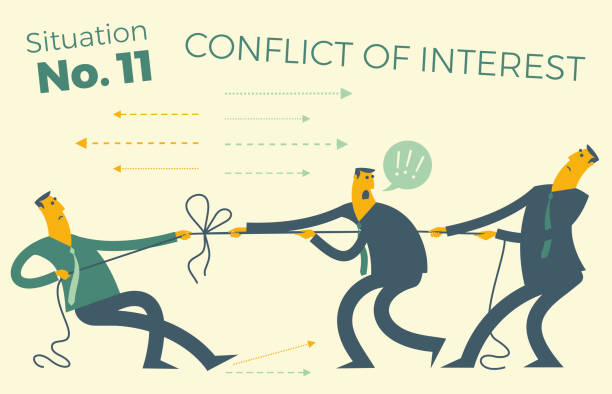
Conflict, as an inevitable phenomenon in human social interaction, is deeply rooted in our instinctive responses. It arises from differences in needs, values, information, or even emotions, and often escalates into high-conflict when relationships become strained. High-conflict is not just simple arguing; it is a deep, destructive force that can tear apart interpersonal relationships, disrupt social order, and even threaten the stability of entire cultural systems.
1. The Nature and Manifestations of High-Conflict
High-conflict usually signals a loss of control in a relationship. It is not merely surface-level disputes but an outburst of inner emotions and the absence of rational communication. In life, we often encounter scenarios such as: couples fiercely arguing and accusing each other of being unreasonable or not listening; coworkers refusing to communicate, stubbornly insisting “I’m right, why won’t you accept it?”; or polarized social or cultural groups locked in extreme opposing stances, leading to irreconcilable differences.
Behind these conflicts often lies a similar psychological and behavioral pattern: the parties involved stop focusing on resolving the actual issue and become obsessed with the conflict itself. Emotions escalate, rational judgment blurs, communication breaks down, and relationships fall into a vicious cycle.
Moreover, it is important to be cautious of high-conflicts that are not spontaneous but deliberately manufactured and amplified by conflict manipulators. They exploit divisions to create opposition for their own benefit—be it economic gain or political power.
2. How to Identify High-Conflict?
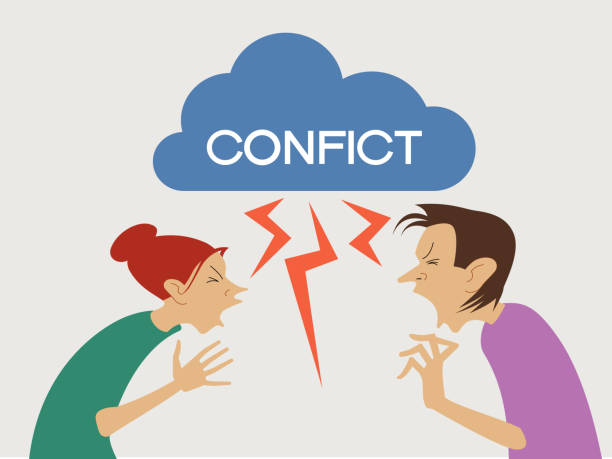
The key to distinguishing high-conflict is to observe language and behavior. The following aspects can help:
1. Listen for signals in speech
- Are there vague, extreme, or hostile words describing the conflict?
- Are rumors, conspiracy theories, or mysterious narratives used to dramatize the conflict?
- Does the language carry stereotypes or oppositional labels, like “They’re always wrong,” or “They are the bad guys”?
2. Observe behavioral manifestations
- Does someone choose to withdraw or avoid, causing a “binary opposition” between the parties?
- What is the underlying motivation for the conflict? Is it a rational demand, or emotional venting and power struggle?
- Does the conflict recur repeatedly, difficult to resolve, or keep escalating?
High-conflict is not always violent in form; it can lurk in words, thoughts, and even persist for years. Sometimes, the conflict exists only in one party’s mind, while the other party is unaware—this is a form of one-sided high-conflict.
3. How to Recognize if You Are Stuck in High-Conflict?
Self-awareness is the first step to escaping high-conflict. Try asking yourself:
- Does thinking about this conflict keep you awake at night or make you restless?
- Do you feel schadenfreude when the other party experiences setbacks, even if it’s unrelated to you?
- If the other party does something you agree with, do you feel extreme discomfort or resistance?
- Do you feel the other party is brainwashed, completely losing rationality and moral judgment?
- Are you stuck obsessing over the same grievance, unable to break free from a mental loop?
- When talking with supporters, do you keep repeating the same points, but the quality of conversation declines?
- Has anyone said you’ve changed and are no longer like your old self?
- Do you often defend yourself by saying “You’ve done worse”?
- Is it hard for you to imagine the other party was once as innocent as you?
- Do you frequently use extreme words like “always,” “we,” “they,” or “war” to describe the conflict?
- Is it difficult to recall the last time you genuinely felt curious about or understood the other party?
If you answer “yes” to more than five of these questions, it’s likely you are stuck in a high-conflict mire. You may find many reasons to justify your feelings, but the key is to recognize the danger and drain of this state.
4. What Should We Do When Facing High-Conflict?
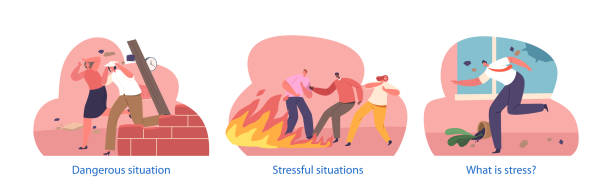
1. Acknowledge and accept the existence of conflict
Avoiding conflict only lets problems accumulate. Recognizing that high-conflict signals relationship breakdown and emotional overload is the first step toward resolution.
2. Buy time and create space
When conflict escalates, the most important thing is to allow both sides time and space to cool down. Like a true story of stranded children on an island who avoided violent conflict by separating and calming down for a few hours, then later apologized and repaired relationships.
Time and space help shift from a “fight mode” to an “understanding mode,” easing emotions and clearing minds.
3. Seek external support and mediation
High-conflict is often hard to regulate internally. Seeking third-party mediation is crucial. Professional mediators, family therapists, community dispute resolution centers, or even trusted friends can act as “firefighters” to help uncover root causes and promote effective communication.
For example, a rural community in western Denmark used community dialogue sessions inviting all involved parties to listen and address each other’s concerns, gradually resolving a long-standing wolf conflict and building mutual understanding and trust.
4. Reduce binary oppositional thinking
Conflicts are often simplified into “us vs. them,” “good vs. bad.” Try breaking this black-and-white thinking, and appreciate the diversity and complexity of all parties involved. Embrace complexity and accept differences, making conversations richer and more authentic rather than hostile.
5. Stay away from conflict instigators
There are always people or groups in society who like to inflame conflicts and create divisions. They stir emotions by exploiting “us vs. them” narratives and profit from conflict. Identify these instigators, keep distance, and avoid getting caught up in endless fights as a way to protect your emotional health.
6. Reflect on the gains and losses from conflict
Regularly assess how the conflict affects you and those around you. Ask yourself: What has this conflict brought? Are the losses balanced with gains? Is it worth continuing to fight? If an opportunity to ease tensions arises, are you willing to seize it? Like the story of Gary who resolved a stalemate with symbolic concessions, small compromises can be turning points for escaping high-conflict.
5.
Although high-conflict is destructive, it is neither unrecognizable nor unmanageable. It reminds us to pay attention to emotional loss of control and communication barriers in relationships, urging us to build healthier and more resilient relational patterns.
Through keen observation, self-awareness, timely communication, mediation, and psychological guidance, we can not only recognize high-conflict around us but also effectively escape it—avoiding emotional entrapment and rebuilding understanding and harmony.
In life, learning to identify the nature of conflict, creating time and space, reducing extreme oppositional thinking, and distancing from conflict manipulators are essential steps on the path to inner peace and relationship repair. May everyone find their peaceful harbor amidst the complexity of human relations.