
In today’s workplace, how to reasonably arrange and prioritize tasks is a challenge everyone must face. Many people make to-do lists, but in execution, unexpected events often disrupt plans, greatly reducing work efficiency. What exactly causes our carefully planned priorities to be repeatedly thrown off? And how can we respond better to achieve our work goals?
Why Are Work Priorities So Easily Disrupted?
Despite our best efforts to arrange work reasonably, reality often falls short. The six main reasons for priority chaos are:
- Sudden urgent tasks inserted at the last minute
- Environmental distractions breaking focus
- Unconsciously switching to handle other tasks
- Emotional fluctuations affecting concentration and judgment
- Overthinking causing indecision
- Limited resources (time, money, personnel) constraining task completion
If these issues aren’t addressed, they will continuously undermine our originally well-ordered work sequence.
Specific Strategies to Address Different Causes

1. Predict and Manage Sudden Tasks
Many so-called “sudden” tasks can actually be anticipated. By observing your supervisors’ and clients’ work styles and schedules, you can predict when tasks are likely to be assigned, and reserve buffer time to reduce disruption. Taking a “bird’s-eye view” of sudden events means seeking patterns and trends rather than blindly reacting.
2. Reduce Environmental Distractions to Boost Focus
Every task suits a particular environment and atmosphere. For example, tasks requiring deep thinking need quiet, distraction-free settings, while repetitive or simple tasks can be done in more relaxed environments. Adjusting your workspace according to task type or vice versa can greatly improve efficiency.
3. Adjust Task Handling Order
Traditional priority lists are often based on deadlines, but this approach neglects the time tasks are actually taken up. It’s better to prioritize tasks based on when you receive them — starting them immediately to avoid last-minute rushing. Recognizing the impact of physical and mental state on behavior helps avoid procrastination and anxiety.
4. Manage Emotions and Maintain a Stable Mindset
Emotional swings directly affect efficiency and decision-making. Learning to regulate emotions through deep breathing, short breaks, or mindfulness meditation helps keep rationality during emotional fluctuations and prevents feelings from dominating work decisions.
5. Avoid Overthinking and Make Decisive Choices
Many people delay decisions by chasing perfection. Setting reasonable decision deadlines and accepting “good enough” can effectively prevent inefficiency caused by prolonged indecision.
6. Optimize Resource Allocation
Limited resources are a reality. Learn to allocate your time, manpower, and budget wisely by focusing limited resources on the most important tasks and avoiding scattering efforts. When necessary, delegate appropriately or use tools to enhance productivity.
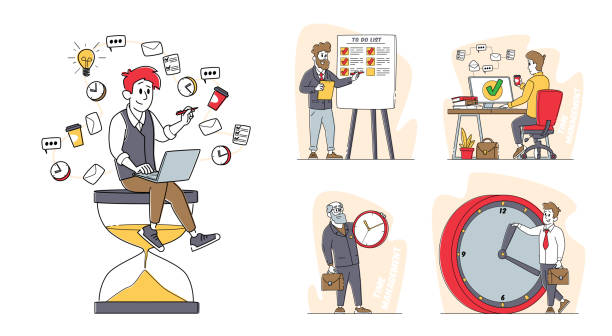
Four Key Principles for Prioritizing Work
Reasonable prioritization must consider these four factors:
- Location: What tasks are suitable for your current place?
- Environment: Which tasks fit the present working environment?
- Time of Day: Energy and efficiency fluctuate at different times
- Physical Condition: Choose tasks based on your bodily state
Detailed Explanation of the Four Principles
- Principle 1: Match Location with Tasks
For example, do computer-dependent work at the office; handle calls or brainstorming when out. This reduces frequent switching of tools and places, enhancing workflow continuity. - Principle 2: Match Environment with Tasks
Quiet environments suit planning and writing, while noisy places are better for repetitive, less cognitive work. Adjusting task allocation by environment reduces efficiency losses due to unsuitability. - Principle 3: Match Time Period with Tasks
People’s energy peaks and troughs vary during the day. Morning suits high-focus work, afternoon for meetings or communication, and evening for simple repetitive tasks. Allocating tasks by energy cycle maximizes time value. - Principle 4: Match Physical Condition with Tasks
When feeling unwell or fatigued, prioritize easier tasks to avoid burnout and maintain long-term efficiency. Ensure enough rest to sustain productivity.
Additionally, accurately estimating task durations is critical. People tend to underestimate time needed, causing plans to fail. Use historical data and experience to build in buffer time.
Break Down and Integrate Large Tasks to Improve Efficiency
When faced with a mountain of tasks, simple prioritization won’t suffice. You should:
- Break large tasks into smaller modules and batch similar or repetitive steps
- Process repetitive tasks together, like daily summaries or expense reconciliation, to save time
- Use fragmented time to handle small tasks, such as replying to emails or confirming details during waits or commutes
- Delegate appropriately to others for tasks that can be outsourced, focusing on your core responsibilities
This breaking down and integration strategy greatly boosts overall efficiency and helps avoid procrastination caused by overwhelming tasks.
Identify and Overcome “Bottlenecks”
Every project or workflow usually has one or more “bottleneck” points that limit overall efficiency. Overcoming these can dramatically speed progress.
- Analyze the workflow, identify personnel and specific tasks at each stage
- Find the steps that take longest or are most error-prone
- Develop targeted optimization plans, such as improving procedures, preparing materials in advance, or adjusting work hours
- Bottlenecks may shift over time, so regularly review and adjust strategies
For frequently recurring bottlenecks, establish Standard Operating Procedures (SOPs) to reduce repetitive decision-making and coordination overhead. For infrequent but critical tasks, prepare checklists or templates with reminders to save time.
Ten Work Rules for Quick Decision-Making
Decision procrastination greatly affects work efficiency. The following ten rules help you make faster judgments and keep your workflow steady:
- Prioritize tasks from the pre-set plan when time conflicts arise
- Prioritize based on task reception time rather than deadline
- When multitasking, handle familiar tasks first
- When time and money conflict, prioritize saving time
- Use money to solve problems instead of time whenever possible
- Refuse extra requests if you have no spare time
- Choose collaborators based on work efficiency
- Prioritize answering questions from subordinates
- Don’t expect too much from your future self tomorrow
- Use unified communication channels to reduce confusion
These are experience-based guidelines; you can adapt or create rules suited to yourself and your team.
Arrange Work Order Reasonably and Handle Unexpected Tasks
Unexpected tasks fall into two categories: predictable and unpredictable.
- Record all unexpected events of the day
- Review and analyze which were predictable
- Incorporate predictable unexpected tasks into future plans to prepare
This reduces disruption to your schedule. Visual task management helps scientifically arrange task sequences.
When encountering difficulties, record solutions promptly to accumulate experience and respond faster next time.
Maintain Work Motivation and Condition
Keeping positive work motivation is key to task completion. Some methods include:
- Start main tasks after a few simple “warm-up” jobs to ease into work
- Temporarily postpone complicated, energy-draining tasks to avoid mood drops
- Maintain good sleep and physical health to provide strong energy support
How to Get Back on Track When Priorities Are Disrupted?
When priorities get chaotic:
- Ensure adequate rest first, maintaining good physical and mental condition
- Reassess and adjust task arrangements, discard non-critical tasks, and reasonably compress workload
- Allow 80% completion for sudden urgent tasks, avoiding over-perfectionism
- Ensure quality of routine tasks is not compromised
These approaches help gradually restore reasonable work order and avoid anxiety-induced efficiency drops.
Reasonable work prioritization is key to improving efficiency and quality. By predicting sudden tasks, creating suitable work environments, breaking down workflows scientifically, identifying and overcoming bottlenecks, making quick decisions, and dynamically adjusting based on your state, you can handle heavy work challenges more calmly. Most importantly, maintain physical and mental health, and allocate time and energy wisely to sustain work enthusiasm and creativity while being highly productive.