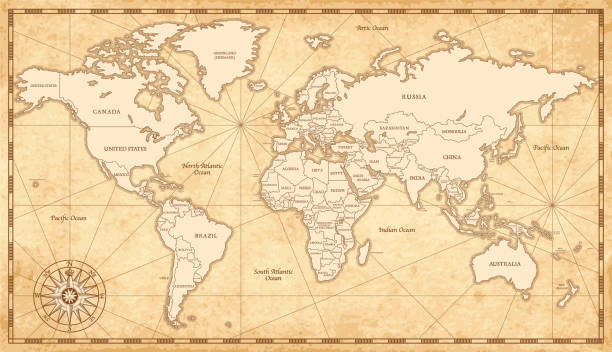
Building a complete, clear, and systematic timeline of world history in your mind is not just an interesting learning challenge—it’s an excellent way to deepen your cognitive abilities and historical insight. Faced with the vast river of history, how can you efficiently construct your own knowledge system from zero, ensuring it is both comprehensive and detailed? Here is a practical framework I’ve summarized to help you gradually build this “palace” of knowledge.
1. Start with Interest and Deepen Learning Gradually
Any learning process is driven by interest. Without interest as support, history becomes a dull pile of dates and events. First, find a particular historical period, event, or region that truly fascinates you. For example, you might be intrigued by China’s Three Kingdoms era, the European Renaissance, or the Industrial Revolution.
Interest will motivate you to “follow the clues”—through reading related books, watching documentaries, or attending lectures—to steadily accumulate knowledge. Don’t rush; building a systematic historical timeline takes at least six months to a year of continuous study and review. During this time, you will continuously discover new knowledge points, link events together, and sense the underlying threads and logic behind history.
2. Build a Knowledge Framework: Thematic Reading + Mind Maps + Memory Techniques
Historical knowledge is like a tree, with a trunk, branches, and countless details. To avoid being overwhelmed by complexity, it’s crucial to establish a clear “tree-shaped” framework.
- Gather Books and Materials
Choose several authoritative and systematic history books, starting with broad overview texts and then moving to specialized thematic works. Reading them multiple times helps form a clear mental outline. - Create Mind Maps
Use mind-mapping software or draw by hand to transform the content into structured visuals. Each historical period, key event, and important figure becomes a node, connected by their relationships and causes. This makes complex information intuitive and easier to remember. - Apply Memory Techniques
Use associative methods, storytelling, or the loci method (memory palace) to turn abstract historical events and dates into vivid, memorable images. This improves how efficiently you store and retrieve information.
You can print a large mind map (A0 or A1 size) and hang it on the wall for easy review and supplementation. Spend 30 minutes to an hour daily memorizing or reciting a branch, and after 2–3 months, you’ll be familiar with the main trunk and key branches of this knowledge tree, forming a solid historical backbone.
For example, to understand a country’s history, first clarify the major historical events of the continent during that period, then break it down into politics, military, culture, economy, etc. List key figures—emperors, generals, officials, cultural icons—and organize them into a mind map, constantly adding content to gradually build your personalized historical knowledge network.
3. Use Historical Strategy Games for Immersive Learning
Game-based learning is especially effective and fun, particularly for children, young people, and beginners. Playing historical strategy games deepens your understanding of historical events and timelines while developing strategic thinking.
- Recommended Game Series
- Civilization series: A classic strategy game that covers nearly the entire progression of human civilization. From the first version to now, it has great educational value, with technology trees, buildings, and cultural developments accurately reflecting civilization evolution.
- Age of Empires series: Focuses more on campaigns and resource management, letting you experience military and economic development across different periods.
- Total War series: Combines real-time battles with strategic planning, recreating many historical wars and demonstrating the complex interaction between military and politics.
- Top Game Developers
Koei Tecmo (Japan) and Paradox Interactive (Sweden) are giants in historical strategy games.- Koei Tecmo’s Romance of the Three Kingdoms XI contains extensive historical figures, events, and terminology, with over a million words of in-game encyclopedic content—an excellent resource for deeply learning Three Kingdoms history.
- Paradox’s Europa Universalis series, Hearts of Iron, and Victoria series focus on macro-level nation management and policy adjustments, richly detailed, allowing deep understanding of diplomacy, economy, religion, and culture between countries.
- Historical Insights from Games
While playing, you naturally connect the timeline and events. For example, the Uncharted Waters series immerses you in the Age of Discovery, teaching not only geography but also political, economic, and technological background of that era. Learning through play is far more effective than passive reading.
4. Output What You Learn to Internalize Knowledge
Knowledge only becomes truly understood and mastered when it turns into something of your own. Passive absorption is not enough; active output is key.
- Writing
Try writing historical stories, book reviews, thematic articles, or even scripts. Writing forces you to organize your thoughts, find gaps, and improves expression skills. - Project Creation
Design a small history-themed website or blog, or create a simple history knowledge app to systematically present what you’ve learned. - Communication and Sharing
Explain, debate, or organize history discussion groups to share your insights. Questions from others will prompt deeper reflection and improvement.
This process forms the classic “input—organize & analyze—output” learning loop. Repeating it turns the historical timeline into living knowledge in your mind, rather than dead facts to memorize.
5. Continuously Adjust and Improve Your Personal Historical System
Building a complete world history timeline is not an overnight task; it requires long-term persistence and ongoing refinement.
- Dynamic Updates
Historical research evolves constantly, with new discoveries and interpretations. Keep up with authoritative publications and latest studies to update your framework timely. - Interdisciplinary Integration
History is more than a list of events; it involves political science, economics, cultural anthropology, and more. Cross-fusing these disciplines helps you understand history more three-dimensionally and comprehensively. - Flexible Application
During your learning journey, keep discovering your interests and adjust priorities accordingly. The timeline should serve your worldview, not become a burden.
Starting from scratch to build a world history timeline is a process driven by interest, systematic study, immersive experience, active output, and continuous refinement. It requires patience and method. By thematic reading and mind mapping to build a framework, using strategy games to deepen impressions, and consolidating knowledge through output, you ultimately internalize history as a wisdom tool to understand the world. With half a year to a year’s steady preparation, you will be pleasantly surprised to find a clear, complete historical timeline gradually forming in your mind, helping you deeply grasp the trajectory of human civilization.